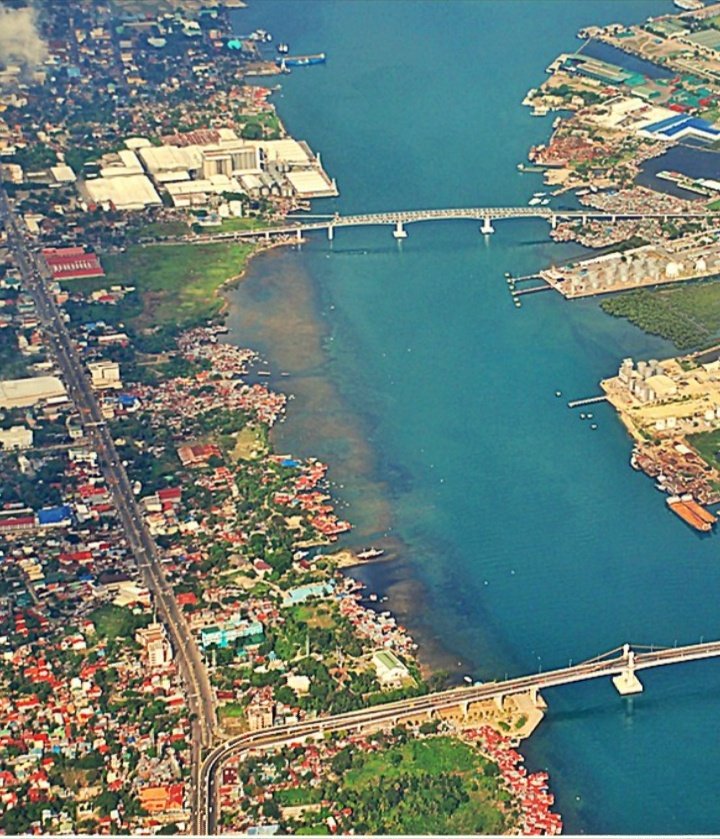
The relocation of illegal settlers along Mactan Channel is among the priorities of Mayor-Elect Ahong Chan when he officially takes office on June 30.
This is according to a highly placed source close to the newly elected mayor.
Lapu-Lapu’s population growth has been astronomical in recent years because of the number of manufacturing companies providing thousands of employment opportunities in the city.
With unprecedented growth comes the perrenial problem of housing and Lapu-Lapu isn’t spared from this phonomenon.
What started as a few makeshift structures along the seafront area in the vicinity of the twin bridges, it has now mushroomed into a serious incursion involving more than a thousand families.
These areas are located in Barangays Poblacion, Pajo, Pusok, Ibo and Mactan.
Mayor Chan vowed to provide decent housing in a suitable relocation site for the displaced families.
Mactan coastline
Rooting out ‘voters‘ from the comforts of their established abode is never easy. Especially when the next election is just thirty six months away.
It needs political will and a lot of courage. InfoCebu hopes the new mayor will accomplish this challenging feat for the benefit of the Oponganons.
Apparently Pinoys are helping the tourism program of the Taiwan government to merit a one year extension. This according to a high ranking Taiwanese official.
Philippines passport holders together with citizens of Brunei, Thailand and Russia are bound to enjoy the privilege of a 14-day visa-free stay until July 2020.
Taiwan is an attractive destination for Cebuano tourists because of available direct flights from Cebu to Tao Yuan (International gateway of Taiwan)
Famous for Taipei 101, Yangmingshan Park, Cable Car Ride, Temples and affordable shopping, Taiwan is something Cebuano adventurers should not miss. All you need is a ticket now.
Gen. Chang Kai Shek is the President of Modern day China from 1928 until 1949 when he was forced to flee abroad because of the Communist Revolution.
He took refuge in an island called Formosa, the present day Taiwan where he continued to govern until his death in 1975.
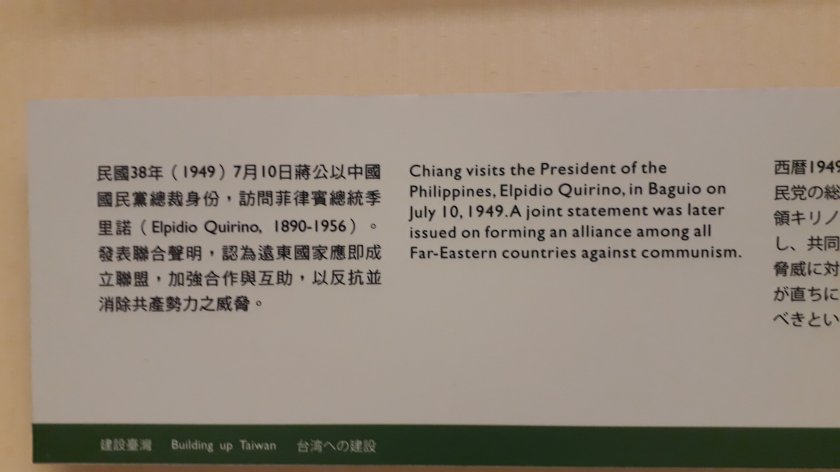
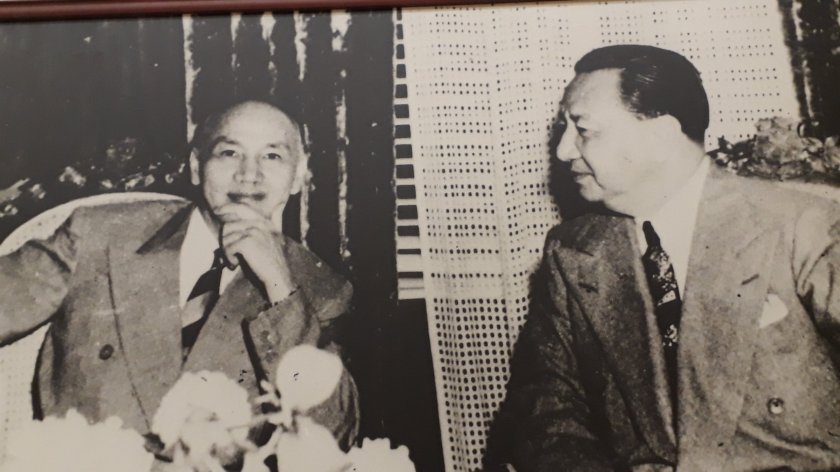
Shortly after arriving in Taipei, one of the first countries he visited was the Philippines. He met with then Philippine President Elpidio Quirino to campaign his cause against communism.
President Quirino and General Chang Kai Shek
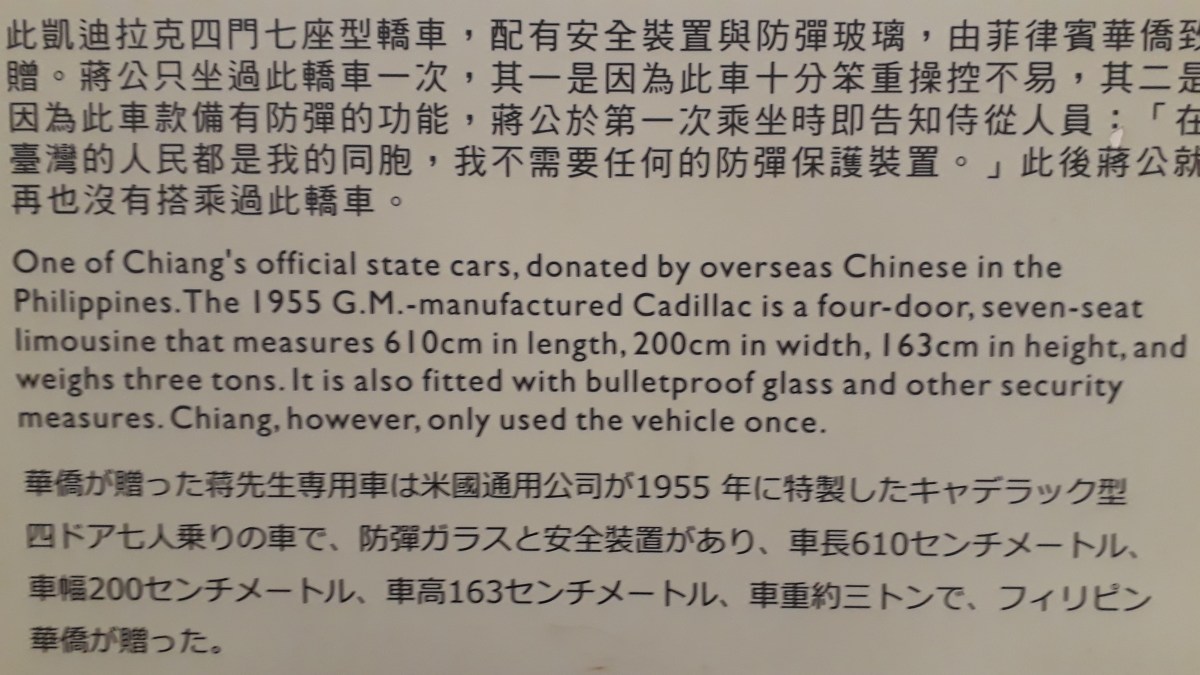
In 1955, The Filipino Chinese community, donated a Cadillac for the personal car of General Shek. That bulletproof car is now on display at his memorial in modern day Taipei.
It is worthy to note that during those trying times in the history of Taiwan and China, the Philippines was considered mighty and rich in Asia.
What a twist of fate it is, looking at the disparity of the economies now between these neighboring countries.
Only 8% of Cebu is flat land and it is depleting very fast. Scarcity drive prices up and with no other option, Cebu’s expansion will be skyward.
Cebu IT Park, then and now
Cebu has a limited buildable space. Only eight percent (8%) of its total land area is flat and this is stretched along the coastline of an elongated island. There are only two growth directions. Go north or move south.
Early days
In the 60’s, southward development began in San Nicolas Mambaling area. Subdivisions like Ma. Gochan with its fruity streets Avocado, Bayabas, Caimito, etc were established for new families.
Today, this area is very near to the city center but in those times, it was considered far. It was the distance of the ‘Parada‘ (Calesa).
Then Labangon, Punta Princesa and Tisa were developed next. Residential structures took over the corn and peanut fields, as demand for new housing steadily increase
The city government of Cebu realized the scarce land resource and the need to address the requirement of a rapidly growing city.
North Reclamation in the 90’s
Plans were initiated for the north reclamation project which eventually became the home of SM City Cebu, the first mall outside Metro Manila.
The 70’s saw expansion crawling towards the barangays of Pardo in the South and Mabolo in the north. Even with the Martial Law, economy in Cebu remained vibrant.
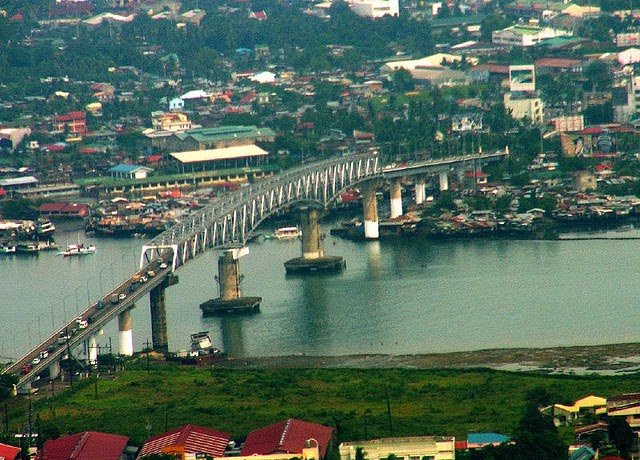
The 1st Mactan bridge
Marcos built the first Mactan bridge which opened up the island for economic and tourism activities.
The 80’s saw major expansion in Cebu, filling the hills of Guadalupe all the way to Pardo.
In the north, Lito Osmena (EMRO Holdings) moved farther north the haven of the ultra-rich, Maria Luisa Subdivision.
Banilad at that time was considered a distant suburb. I remember buying Japanese corn in a sparsely populated stretch in today’s BanTal road, which became Gaisano Country Mall not long after.
Gaisano Country Mall
The 90’s saw an unprecedented growth in Cebu. Dubbed “Ceboom”, the tandem of governor Lito Osmena and Mayor Tom Osmena opened Cebu to opportunities never seen before.
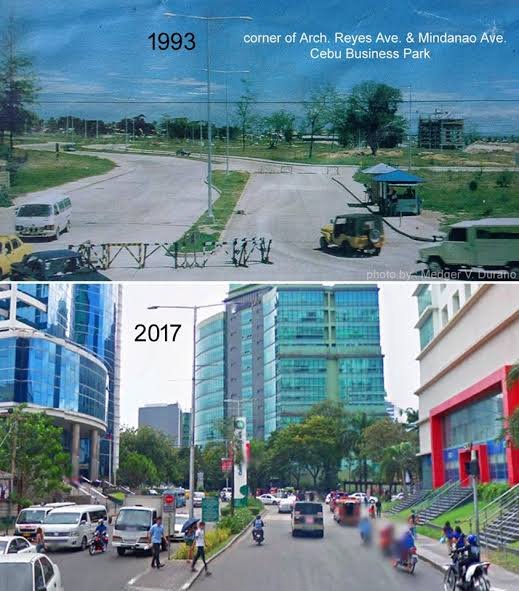
Cebu Business Park, then and now
Manila developers went on crazy shopping for land. Ayala cornered the provincial lot used as a golf course and the Lahug airport property, both of which are now bustling business districts. SM also secured the greatest chunk in the new reclamation.
Residential expansion now extends to Talisay city and Mandaue city. The northward expansion also shifted eastward to Mactan island because of the transfer of the new airport and the creation of Mactan Export Processing zone.
Low cost housing became a hit, selling in the thousands as Pag-Ibig loan facility became available.
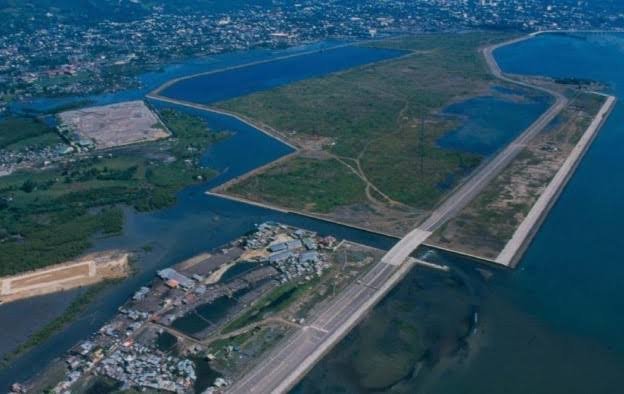
The SRP when it was newly completed
Mayor Tom Osmena then floated the idea of a south reclamation project even before the one in the north was completely sold-out.
The early nineties was also called the age of malling as three giant malls opened in Cebu City within an 18-month period. Gaisano Country Mall, opened in 1992 followed by SM City Cebu then Ayala Center Cebu (ACC) in 1993.
How these malls almost killed the businesses in Colon street will be a good separate story.
Vertical Homes
Condominiums started out in Cebu as mere status symbol for the rich. But it was short-lived with the onset of the Asian Crisis in 1997-98.
The slowdown in real estate activities continued into the new millennium although low and mid-high properties continue to sell.
Then there was the second wave of Ceboom in 2006. It just exploded out of nowhere and real estate growth went exponential since then.
Two things happened, residential properties are now pushed farther north to Compostela and down south to Naga city, but traffic also started to deteriorate and became a daily occurence.
Traffic woes and scarcity of space made condominiums a necessity in Cebu rather than an item of luxury as it was before.
Reaching the limit
Areas after Compostela in the north and Naga City in the south are no longer viable as residence for low and mid-income families who commutes daily for school and work in Cebu City. It is a total waste of time, productivity and money.
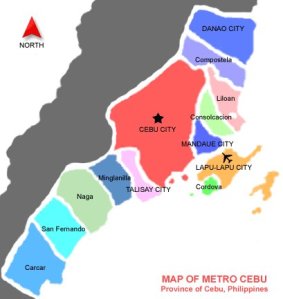
Metro Cebu
Nowhere to go
This is a clear indicator that Cebu has nowhere to go but up. The future is in the skies.
There are ambitious plans to build highways slicing through the mountain or a viaduct above the sea. Even a mass transport system, probably the rail type is in the works.
But these infrastructures take time to build, and while they help in moving people fast, the scarcity of land remains. It is irreversible.
Developers know its a dire situation. They now scamper hard even for small parcels of land just to be able to churn out projects like pocket developments.
Cebu’s topography is telling us its not just the best time to buy a house now but its the only time left before prices will become exceedingly expensive. Scarcity drive prices up.
If you have money to invest, do not wait and see, for waiting is a costly exercise in real estate. Buy now then sit back and watch the value of your property grow.
When all the land is utilized, Cebu’s future development will be skyward. A true skyscraper city in the making.
*********
Credit goes to the owners of images used. Special mention Slerz, whose passion for Cebu is unwavering, a fellow Skyscrspercity forumer and a good friend.
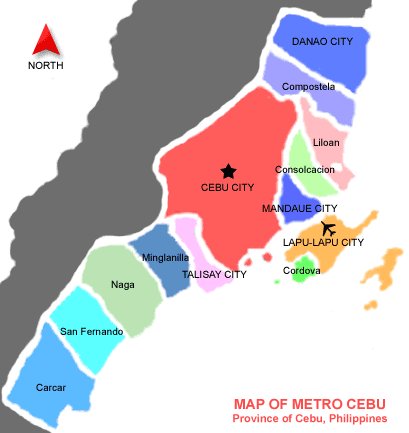
Minglanilla, Consolacion and Liloan are municipalities in Metro Cebu that are now on the verge of cityhood based on the qualifications set forth by R.A. 9009, the governing law on cityhood or conversion of a municipality to a city.
Republic Act. 9009
locally generated income of at least ₱100 million (based on constant prices in the year 2000) for the last two consecutive years, as certified by the Department of Finance,AND
a population of at least 150,000, as certified by thePhilippine Statistics Authority(PSA);ORa contiguous territory of 100 square kilometers, as certified by theLand Management Bureau, with contiguity not being a requisite for areas that are on two or more islands
Size
For the territorial requirement of 100 square kilometers, not one among the three Metro Cebu towns can qualify since they all have a smaller land area, with Consolacion having only 37sq.km, the smallest of the three.
So the only way to go is to comply with the two other requirements. Income and Population.
100M Annual Income
Money seems not a problem these days for Consolacion, Liloan and Minglanilla as they all have annual earnings exceeding the minimum parameter of 100M.
150,000 Population
On the question of population however, not one of the three can make the cut. That is if we refer to the latest census of 2015:
Liloan: 118,753
Minglanilla: 132,135
Consolacion: 131,528
But that is four years ago. These are fast growing urban areas that are averaging 4% to 10% year-on-year growth on its population.
Looking at the demographics, both Consolacion and Minglanilla should have breached the mark already as early as last year (2018), while Liloan will also make it in 2020 or 2021 at the latest.
Cities enjoy greater autonomy from the national government and a much bigger share of the Internal Revenue Allotment (IRA).
But the biggest change of all for new cities aside from the label, is the prestige and distinction it gives to all its residents.
A moment of pride and collective excitement for the milestone in history, when their once sleepy town finally ‘arrived‘ to join the big league.
Of course it is the people through a plebiscite who will eventually decide the fate of any cityhood proposal, but almost always, the excitement and human instinct for self -advancement prevails.
To the people of Minglanilla City, the City of Consolacion and Liloan City, congratulations in advance and please keep your city clean.






 InfoCebu