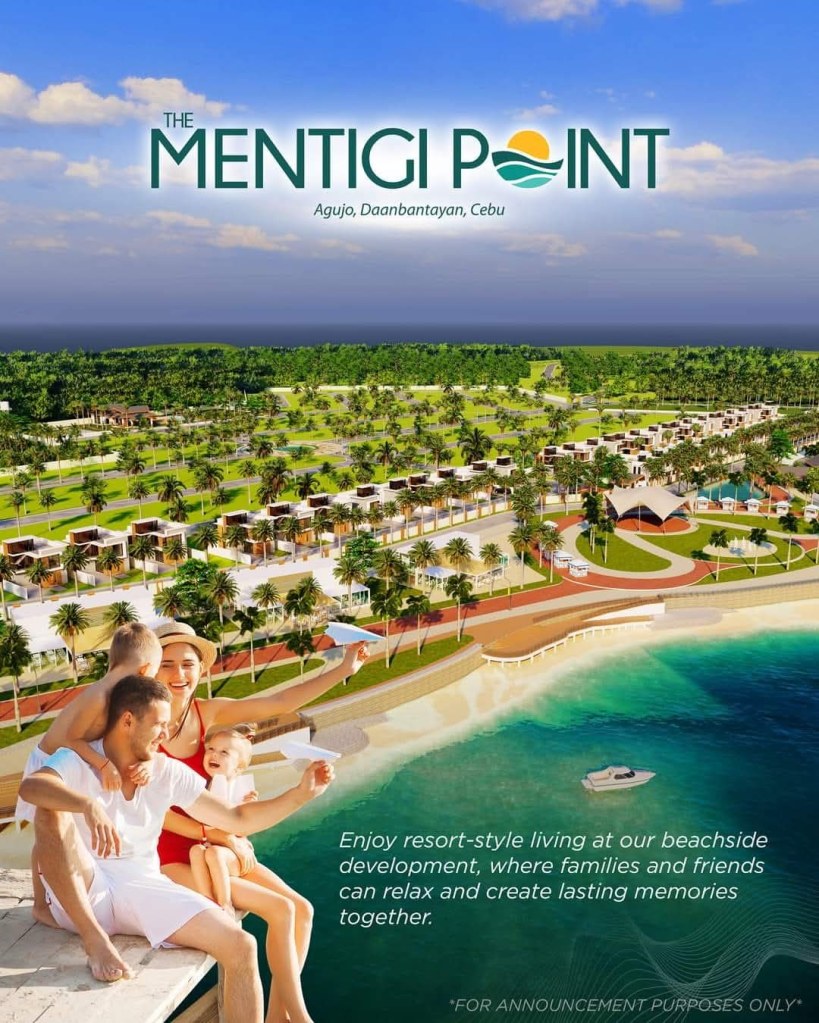
Duros Land Properties, a homegrown real estate developer, is taking a bold step into the northern frontier of Cebu with its newest flagship project: The Mentigi Point. A visionary master-planned development located in the idyllic coastline of Daanbantayan, the northernmost town in mainland Cebu.
Daanbantayan is known for its natural beauty, white sand beaches, upscale resorts, and world-class diving spots. Now, with The Mentigi Point, the town is set to become a landmark destination for both leisure and investment.
Project Highlights
Located in Lower Bantigue, Barangay Agujo, The Mentigi Point is a mixed-use development initially offering residential lots, perfect for private vacation homes or for long-term investments.
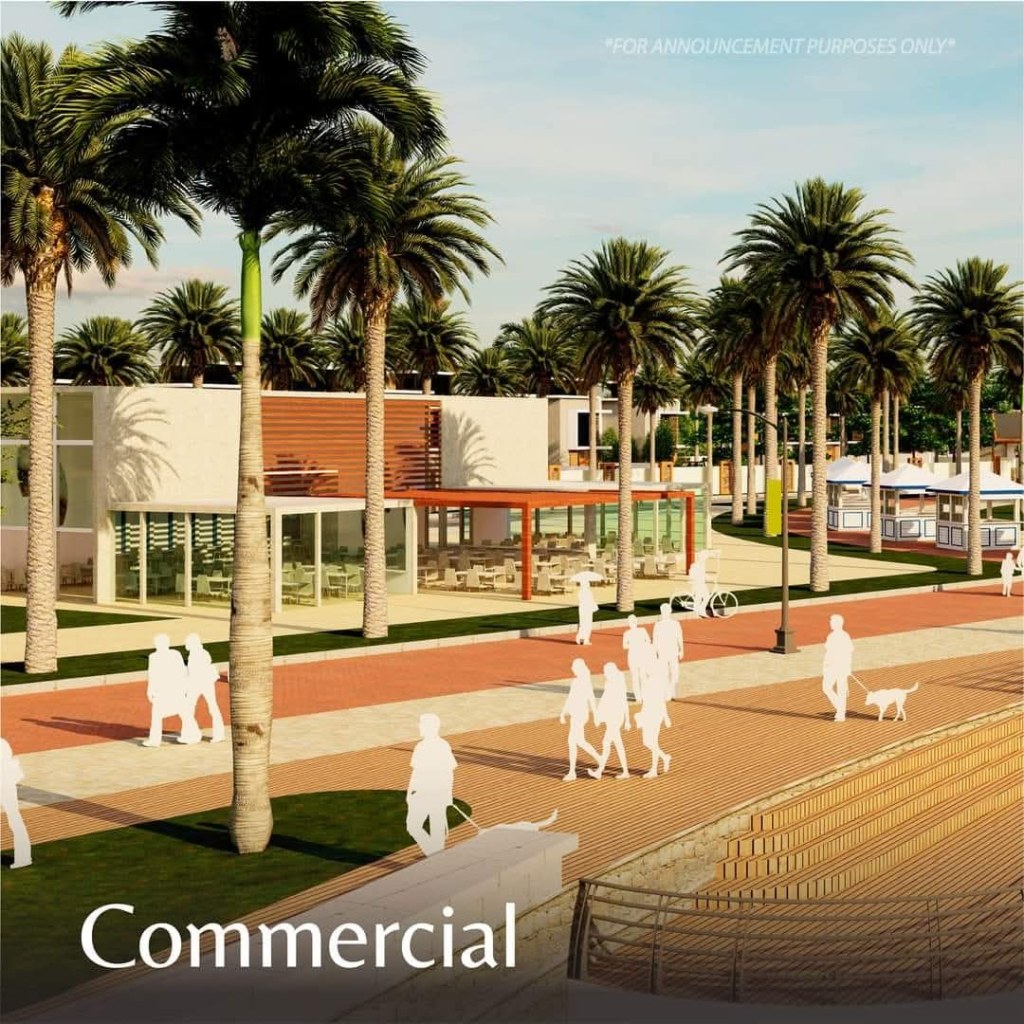
The next phase will offer resort-style condominiums, a hotel, a convention pavilion and a commercial strip by the beach.
Boasting of more than 300 meters of white sand beach frontage, endless fun awaits the whole family at The Mentigi Point.
Duros Land Properties Inc, has a proven legacy of transforming potential into prosperity. From building an 18-hole golf course in Barangay San Roque, and a 14 storey hotel in Barangay Yati, both in Liloan, Duros Land brings a level of commitment and experience that elevates every location it touches.
As a leisure-oriented developer, it commits to deliver two things to its buyers: Expansive open spaces and exceptional amenities.
With The Mentigi Point, Daanbantayan stands ready to announce to the world that it is no longer a hidden gem, but a rising star in Cebu’s future. 5 minutes away is the Daanbantayan Astrodome (under construction) while Bogo City’s commercial district and the soon-to-rise Medellin Airport are both less than 30 minutes away.
Only one missing element to complete The Mentigi Point.……You.
Many have dreamed of a bridge linking Cebu and Bohol, a bold connection that could transform travel and trade between the islands. But while the idea is captivating, the reality beneath the waters of the Mactan–Olango channel tells a different story, one of extraordinary depth, complex engineering, and massive costs. This isn’t to say it will never happen, but for now, the bridge remains a vision tempered by practical challenges.
It is extremely challenging from technical, financial, and environmental standpoints.
1. Distance and Scale
The shortest straight-line distance between Central Cebu (Cordova area) and northern Bohol (Jetafe) is about 20–25 km.
For comparison, the Cebu–Cordova Link Expressway (CCLEX) is only 8.9 km long.
A Cebu–Bohol bridge would therefore need to be 2–3 times longer than CCLEX, making it one of the longest sea-crossing bridges in Southeast Asia.
2. Deep and Complex Sea Bed
The Cebu Strait and Bohol Strait have deep waters (up to 200 m in some areas) with strong tidal currents especially the area between Olango and Mactan.
Deepwater bridge piers would be technically difficult and extremely costly to construct.
Similar projects worldwide (e.g., Hong Kong–Zhuhai–Macau Bridge) required advanced engineering and huge budgets due to deep seabeds and typhoon-prone conditions.
3. Environmental Concerns
The area between Cebu and Bohol is part of the Danajon Double Barrier Reef, one of the few double barrier reefs in the world.
Construction could damage coral reefs, seagrass beds, and fisheries, affecting local communities dependent on fishing.
Environmental compliance and opposition from conservation groups would significantly delay or block such a project. The new Cebu Archbishop Alberto Uy already announced last year when he was still assigned in Tagbilaran that he will oppose the plan to build a bridge.
4. Weather and Seismic Risks
The Visayas region is typhoon-prone. Designing a bridge that can withstand typhoon winds, storm surges, and saltwater corrosion would drastically increase costs.
The area is also near the Philippine Fault Zone, raising earthquake risk concerns.
5. Shipping Lanes
The Hilutungan Channel is a busy navigation route for cargo and passenger vessels.
The bridge would need very high clearance or an alternative design (such as a suspension span) to avoid obstructing maritime traffic.
5. Cost Impact
The Mactan–Olango crossing would require:
Extremely tall pylons (comparable to or taller than the Akashi Kaikyō Bridge in Japan), or
A subsea tunnel segment, which is even more costly.
This section alone could drive up the project cost by tens of billions of pesos.
5. Economic Viability
Estimated cost for a 20–25 km sea bridge could exceed ₱200–300 billion (USD 3.5–5 billion).
Given the population and traffic demand between Cebu and Bohol, toll revenue may not justify the investment.
Ferry services currently provide a cheaper alternative for both passengers and cargo.
6. Alternative Solutions Already in Place
Fast crafts and Ro-Ro ferries already connect Cebu and Bohol efficiently in about 1.5–2 hours.
Expansion of port facilities or faster ferries would be far cheaper than a fixed bridge.
The government should provide incentives to private companies investing in modern catamarans, like those built in Balamban and delivered to Denmark and other
✅ Conclusion: While technically it may be possible, a Cebu–Bohol bridge faces extreme engineering, environmental, and financial barriers. For now, improving ferry infrastructure remains a far more realistic and cost-effective solution.
It is commendable however, that our government officials are having this conversation, so as to open any infrastructure plan to public scrutiny and healthy exchange of ideas.
Incidentally, there are urgent and crucial infrastructure projects that Metro Cebu need as recommended in a comprehensive study conducted by JICA . contained in a final report they submitted in 2019.
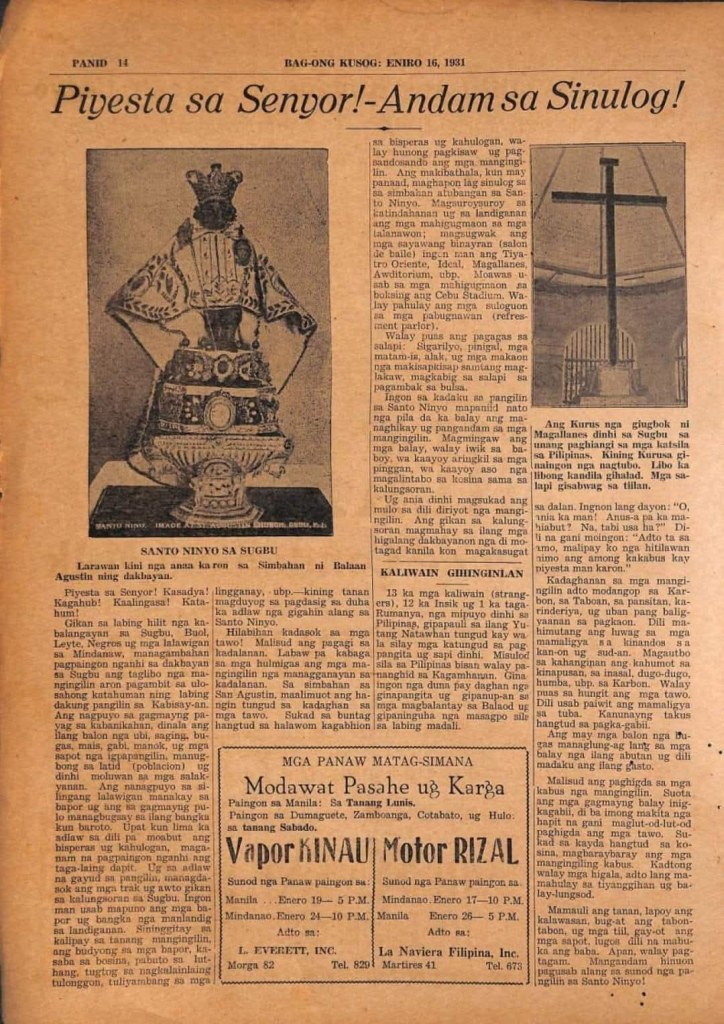
From the January 16, 1931 issue of Bag-ong Kusog, we are offered a rare window into Cebu almost a century ago, its people, its culture, and the vibrant celebration of the Sinulog Festival. Long before modern parades, street dances, and grand concerts, Sinulog was already the beating heart of Cebuano faith and festivity.
Jan 16, 1931 issue of Bag-ong Kusog, archived by Max Limpag
A Feast That Drew Thousands
Even in the early 1930s, Sinulog was no small-town affair. Pilgrims from every corner of Cebu, and even from neighboring islands such as Leyte, Negros, and Buol (likely Bohol), would travel to Cebu City days before the two-day fiesta. Ships arrived at the ports fully loaded with passengers, while trucks and vehicles from across the province poured into the city, bringing with them the anticipation of a grand celebration.
The newspaper described the scene vividly:
“Hilabihan kadasok sa mga tawo, malisud ang pag-agi sa kadalanan. Labaw pa kabaga sa mga hulmigas ang mga mangingilin…” (Crowds were so dense it was difficult to move along the streets. The pilgrims were as numerous as swarms of ants.)
Faith and Devotion
As in today’s Sinulog, devotion to the Santo Niño lay at the heart of the festivities. Those who had made vows, mga may panaad, would spend the entire day at the Basilica, dancing theirsinulogin front of the Holy Child. For many Cebuanos, this was an act of deep personal faith, a gesture of gratitude and petition that transformed the city into a living prayer.
A Festival Beyond Religion
Yet Sinulog in 1931 was not purely religious. Cebu’s fiesta spirit extended well beyond the churchyard. The city came alive with social events:
Dance halls (Salon de baile) filled with music and merriment,
Theaters such as Oriente, Ideal, and Magallanes Auditorium staging popular shows,
Even boxing matches at the Cebu Stadium, which drew large and enthusiastic crowds.
The celebration spilled into every corner of the city. People converged in bustling districts like Taboan, Carbon, and Pansitan, where trade, food, and entertainment intertwined in a lively mix of faith and festivity.
A Century of Continuity
Nearly a hundred years later, the Sinulog Festival has grown into one of the Philippines’ grandest events, attracting millions of visitors from around the world. Yet, as this 1931 account reminds us, its essence remains unchanged: a city united in faith and festivity, welcoming pilgrims and revelers alike in honor of the Santo Niño.
Sinulog is indeed a cultural phenomenon, its soul rooted in the timeless devotion and joy of the Cebuanos, enduring from time immemorial to this very day.
When Steve Benitez opened the first branch of Bo’s Coffee in Ayala Center Cebu in 1996, few could have imagined that this humble kiosk would evolve into a global Filipino brand. Born in a time when international coffee chains were starting to dominate the Philippine market, Bo’s Coffee stood out by being proudly local, and more importantly, proudly Cebuano.
Planting the First Seed
Steve Benitez was just a young entrepreneur with a law degree and a big dream. Instead of pursuing a legal career, he followed a different aroma — the rich scent of freshly brewed coffee. That dream began with a simple desire: to serve coffee made with homegrown beans from the highlands of the Philippines and create a space that celebrated Filipino warmth and hospitality.
The early days were tough. People didn’t immediately flock to a “local” coffee shop. In fact, Benitez had to do the barista work himself, sometimes even giving away free coffee just to introduce the brand. But he stayed firm, fueled by passion, belief in Filipino products, and his Cebuano grit.
Rooted in Filipino Identity
Unlike global coffee chains that showcase foreign flavors and imported beans, Bo’s Coffee built its brand on a different principle: supporting Filipino farmers and communities.
The beans come from the mountain provinces of Sagada, Benguet, Mt. Kitanglad, Mt. Apo, and Mt. Matutum. Each cup served in Bo’s is a tribute to the Philippines’ rich coffee-growing heritage. This commitment to local sourcing didn’t just ensure fresh quality — it also empowered farming communities across the country, making Bo’s not just a business but a movement.
Moreover, Bo’s Coffee made a conscious decision to highlight Filipino culture in every detail — from the interiors of their stores that feature local art and furniture to their partnerships with local social enterprises. It’s a coffee experience infused with bayanihan and malasakit.
The Cebuano Spirit of Resilience and Innovation
The growth of Bo’s Coffee can also be seen as a mirror of Cebu’s own rise — from a regional hub to a global player. Just as Cebu established itself as a center for trade, tourism, and culture, Bo’s grew from one shop to over 100 branches nationwide, then began opening doors abroad.
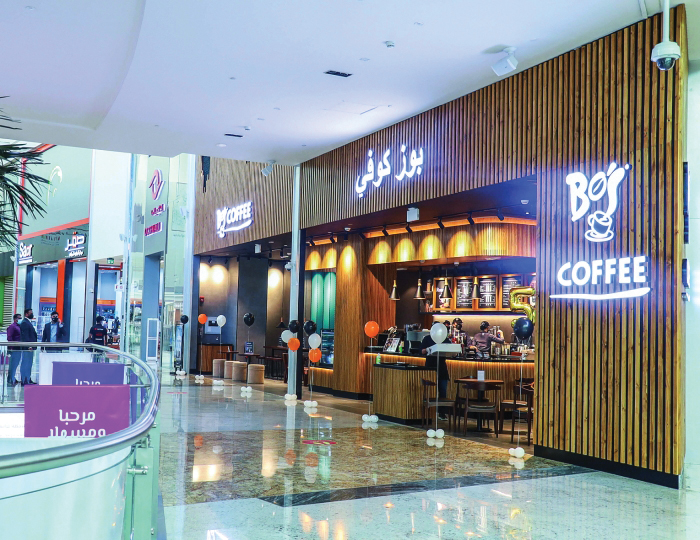
In 2018, Bo’s Coffee opened its first international branch in Doha, Qatar, followed by expansion plans in the UAE and other key cities in the Middle East. This was not just a business move; it was a tribute to the millions of OFWs and Filipinos overseas who longed for a taste of home.
Steve Benitez called this move a way to “bring the Filipino coffee experience to the world.” And just like that, a Cebuano-born coffee brand became a symbol of national pride, carried abroad by the winds of nostalgia and ambition.
More Than Coffee: A Platform for Empowerment
One of the lesser-known yet deeply inspiring aspects of Bo’s Coffee is its support for social entrepreneurs. The company collaborates with local enterprises like Anthill Fabric Gallery (for uniforms and furnishings), Bayani Brew (for bottled tea), and Hope in a Bottle (for purified water) — creating a value chain that uplifts small businesses and promotes sustainable livelihoods.
This ecosystem approach — where success is shared, not hoarded — reflects the Filipino value of community, deeply rooted in Cebuano heritage.
Legacy Brewing
Today, Bo’s Coffee continues to expand while keeping its values intact. It has become more than just a coffee shop; it’s a homegrown legacy, a Cebuano-born brand that chose to grow slow, grow proud, and grow local — before going global.
As the aroma of Filipino coffee begins to waft across the world, Bo’s stands as a reminder that sometimes, the best brands don’t come from Silicon Valley or European capitals. Sometimes, they begin right in the heart of Cebu — with a bold vision, a warm heart, and a very good cup of coffee.
Bo’s Coffee has more than 120 branches already including 9 outlets in Qatar and 2 in Dubai. Canada and the USA ate next in their expansion
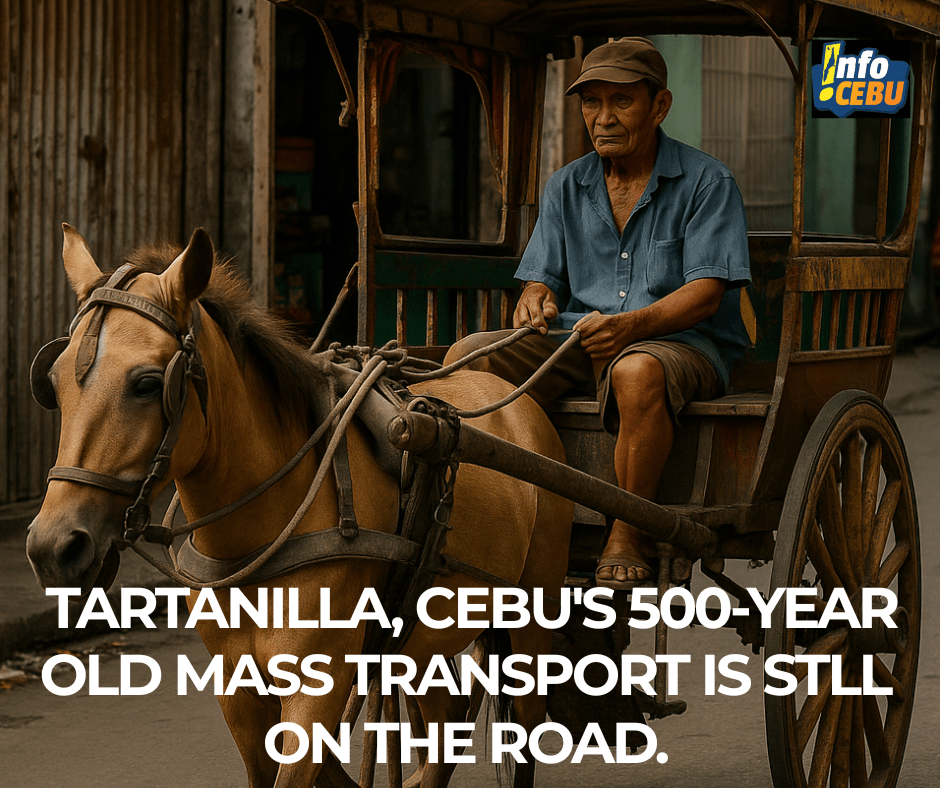
For more than 500 years, the humble horse-drawn carriage, Tartanilla or Parada to Cebuanos, has been quietly and faithfully moving people through the streets of Cebu. While empires have risen and fallen, and cars have gone from steam to diesel to electric, the tartanilla continues its journey, one slow, steady trot at a time.
In a world racing toward artificial intelligence and space tourism, it’s almost absurd, and absolutely beautiful, that a mode of transportation pulled by a living, breathing animal still shares the road with Teslas and e-bikes.
And yes, they’re still here.
Not just for tourists, not for display in a museum, but for actual, daily, public transportation. While you may also find them in Intramuros and Vigan with their Barong-wearing Kutseros, but those are just for picture taking and short tours for tourists. A cultural preservation you can call it, but in Cebu, they still toil in the same manner as 500 years ago, oblivious to the changes in the world around them.
🐴 A Horse, a Carriage, and a Century of Service
Long before Uber, Grab, or even the Ceres bus, Cebuano commuters had the tartanilla. Derived from the Spanish calesa, the tartanilla was the preferred ride of both the masa and the ilustrado, serving everyone from market vendors to priests, from public school kids to Katipuneros on secret missions.
Their routes once stretched from Pari-an to Pasil, from the Cathedral to Colon, and even up to Lahug and Guadalupe. They were the icons of a pre-war Cebu, when crossing town meant taking a tartanilla, not hailing a ride-share app.
Back then, horses didn’t just pull people, they pulled a city forward.
🐎 Not Just a Memory
Fast forward to today, and while many Cebuanos believe the tartanilla is extinct, like the telegraph or love letters, a small herd of these faithful four-legged taxis still clip-clop their way through Duljo–Fatima, B. Aranas, Pasil, Taboan and Carbon Market.
In 2023, the Cebu City Department of Veterinary Medicine and Fisheries recorded 34 operational tartanillas in the downtown area. The number may have shrunk since, but their impact, and charm, has not.
“Actually, it is still effective,” says Dr. Jessica Maribojoc, DVMF head. “There are still passengers who prefer riding them.”
She adds that there is even a city proposal to formally integrate tartanillas into a heritage transport system, especially around Cebu City Hall to Colon Street, areas rich in culture and stories.
🩺 Horses with Check-Ups
These aren’t neglected animals left to suffer in the heat. Twice a year, city vets visit each kutsero and horse, providing:
Vitamins
Physical checkups
Blood tests for infections
Proper hoof and skin care
It’s a community effort to keep both the horses and history alive.
⚙️ Obsolete Things… Except the Tartanilla
Let’s pause and reflect:
We’ve landed on the moon.
We’ve abandoned the steam engine, the telegraph, and dial-up internet.
No one sends mail by horse courier anymore.
Cassette tapes? Gone.
Typewriters? Museum items.
And yet… the tartanilla lives.
Somehow, the horse — this ancient, loyal creature, is still on the road, racing (albeit politely) with cars that now run on gasoline, diesel, or electricity.
“Init ug ulan, abog, ka kapoy gi agwanta ang tanan……”
—
🤣 And Now, A Little Horse Sense
Think about it:
No traffic gridlock. Horses don’t rush; they keep it moving, slow and steady.
No carbon emissions. Zero-emission, 100% compostable.
No engine failures. Just hay and water.
No parking problems. They’ll stop where you say “preno.”
And drunk driving? Totally fine. Because let’s face it: the horse knows where it’s going. You don’t steer a tartanilla, the horse does. So technically, the driver is just the passenger with a whip.
In a world where smart cars can drive themselves, Cebu already had the solution: a horse with a brain and a direction.
❤️ Clip-Clopping Into the Future
So the next time you’re stuck in traffic on SRP, watching the fuel gauge drop and your temper rise, remember: there are still horses in Cebu that get to their destination faster than you.
The tartanilla isn’t just transportation. It’s Cebu’s heartbeat on wheels, a living relic, and a reminder that sometimes, the old ways still work, even better than the new.
And perhaps the best part? When the day ends, and the kutsero lets the reins go slack, the horse already knows the way home.




 InfoCebu