The Last Dawn of the Cebu Tamaraw

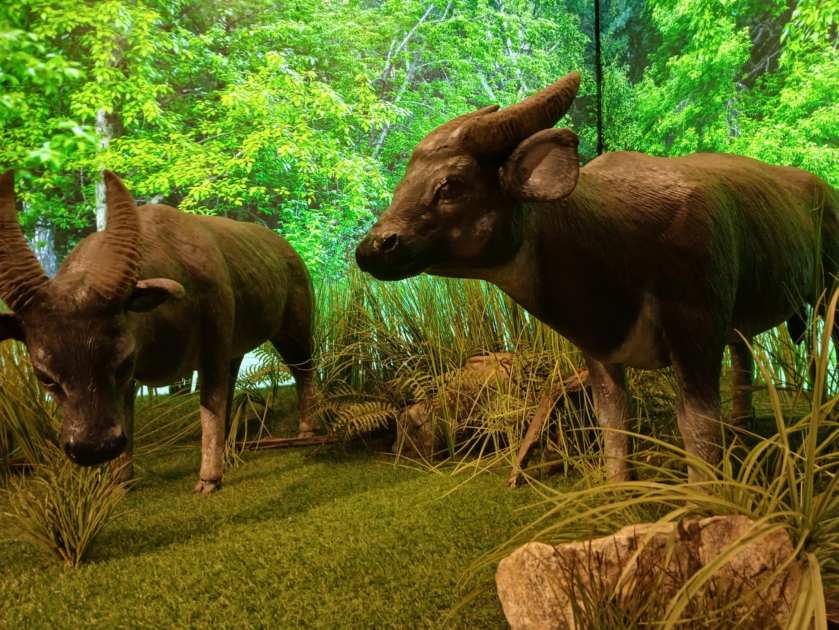
From the displays of National Museum Cebu

Ten thousand years ago, in the damp cool of a Pleistocene morning, the slopes of Cebu stirred with movement. From the shadow of giant ferns emerged a small, sturdy figure, stocky legs planted firmly, crescent-shaped horns sweeping outward, dark eyes sharp with caution. This was the Cebu Tamaraw, Bubalus cebuensis, the island’s own wild water buffalo.

It was no towering beast like its mainland cousins. Standing barely 75 centimeters at the shoulder and weighing around 150 kilograms, it was a product of island dwarfism, nature’s quiet strategy for survival where food was scarce and space was tight. Here, smaller meant stronger in the long run, quicker to feed, easier to hide.

The tamaraw herds moved in loose groups, grazing the grass patches between Cebu’s forests. Mornings were spent feeding; afternoons, resting in the shade of almaciga and fig trees. They were not prey to be taken lightly. Their horns, though smaller than those of mainland buffalo, could gore a wild dog in a heartbeat. Their compact frames hid powerful muscles built for sudden bursts of speed.

The Shrinking World

But the island was changing. The Ice Age seas were rising, the lowlands shrinking. Grassland gave way to thicker forest. Food became harder to find. The herds grew restless, their trails narrower, their calves fewer.

And then came a new predator, humans. Armed with sharpened spears and clever traps, they began to stalk the tamaraws along the edges of the forest.

One legend tells of a herd cornered near the high ridges of what is now Balamban. Surrounded by hunters, the tamaraws lowered their heads and charged together, horns forward, hooves pounding, a living wall of defiance. They broke through the line once, twice, but the world they knew had already slipped away.

What Remains

Today, their bones tell the rest of the story. Fossil fragments found in Cebu’s caves revealed their small stature, robust teeth, and powerful legs, echoes of an animal perfectly adapted for its island home, yet ultimately unable to outpace change.

In the Cebu Museum, life-sized reconstructions stand frozen in eternal grazing, their black hides glistening under artificial sunlight. Visitors pass by, some pausing to imagine the real thing, moving in the mist, hooves wet with morning dew, vanishing into the green shadows of a Cebu that no longer exists.

Cebu Trans-Axial Highway: When Will It Finally Materialize?

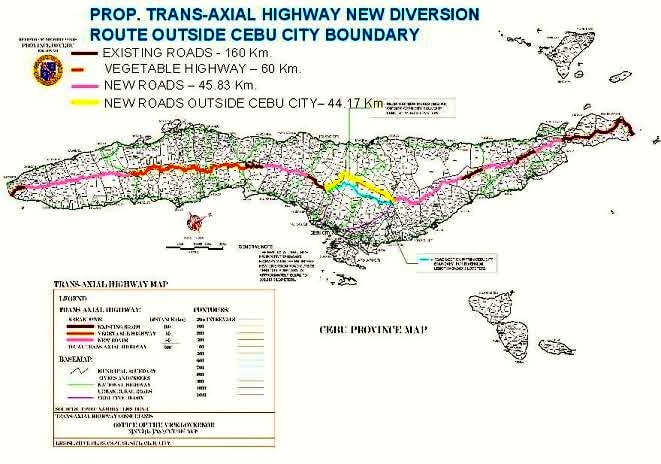
The dream of a 300-kilometer backbone expressway that will connect the southern tip of Cebu in Santander all the way to the northernmost town of Daanbantayan has been in the pipeline for years. Known as the Cebu Trans-Axial Highway, this ambitious infrastructure project is envisioned to serve as the island’s main arterial road, boosting connectivity, cutting travel time, and spurring economic growth across the province.

The project had its pre-feasibility study completed in 2008, marking the first step toward its realization. By 2013, it gained further traction when it was formally endorsed by the Regional Development Council (RDC), signaling strong local support and recognition of its potential to transform Cebu’s transportation landscape.

Yet, more than a decade later, the highway remains on the drawing board. The key reason: it is still awaiting approval from the National Economic and Development Authority (NEDA) national office. Without the green light from NEDA, the project cannot move forward to full feasibility studies, funding arrangements, and eventual construction.

During the 2025 campaign, Cebu Governor Pam Baricuatro mentioned that she would revive the plan, giving renewed hope to proponents who have long been calling for the project’s realization. With Cebu’s population and economic activity continuing to grow, they argue that the Trans-Axial Highway is no longer just a development vision but an urgent necessity.

For many Cebuanos, the question remains: When will this long-awaited expressway finally materialize? Until decisive action is taken, the dream of driving seamlessly from Santander to Daanbantayan will remain just that , a dream on paper.


🎙️𝗪𝗵𝗼 𝗗𝗼 𝗬𝗼𝘂 𝗟𝗶𝘀𝘁𝗲𝗻 𝗧𝗼?

Our opinions aren’t formed in a vacuum. They are shaped, little by little, by the voices we tune in to every day. In Cebu, for more than two decades now, two titans have ruled the early morning airwaves. Their voices have become fixtures in our daily routines, shaping public opinion one commentary at a time.

Even with the shutdown of ABS-CBN, veteran journalist Leo Lastimosa has continued to air his daily dose of political insight and sharp observation online, undeterred, unwavering, and unapologetically critical.

On the other side, a lawyer with a sharp tongue and a wit to match, Atty. Ruphil Banoc of DYHP / RMN delivers his views with a punch, often wrapped in humor, anecdotes, and direct hits.

Interestingly, they often have contrasting take on the prevailing issues of the day, two choirs singing from the far edges of the opinion spectrum.

From barbershops to roaming taxis, their voices ring out daily, steadfast in conviction, preaching their gospel-truth to any soul willing for communion.

Two styles. Two ideologies. Two loyal followings. Which voice influences you more? Who do you listen to? Atty. Ruphil Banoc or Leo Lastimosa

#CebuVoices #LeoLastimosa #RuphilBanoc #CebuRadio #PoliticalCommentary #InfoCebu

Sinulog 1931: A Glimpse of Pre-War Cebu

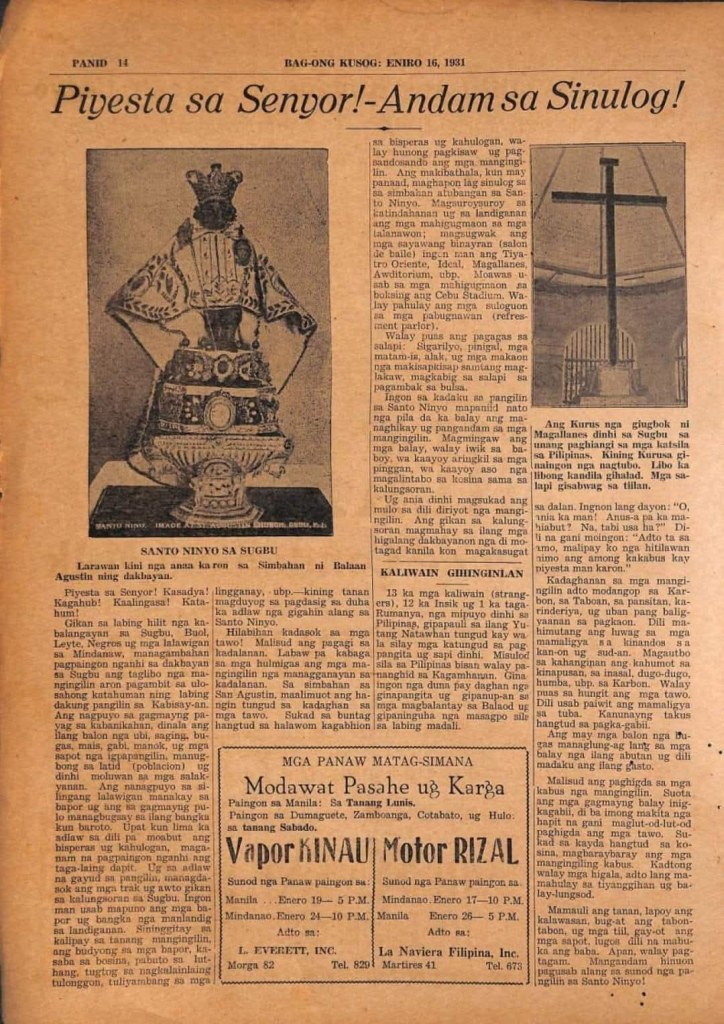
From the January 16, 1931 issue of Bag-ong Kusog, we are offered a rare window into Cebu almost a century ago, its people, its culture, and the vibrant celebration of the Sinulog Festival. Long before modern parades, street dances, and grand concerts, Sinulog was already the beating heart of Cebuano faith and festivity.

Jan 16, 1931 issue of Bag-ong Kusog, archived by Max Limpag

A Feast That Drew Thousands

Even in the early 1930s, Sinulog was no small-town affair. Pilgrims from every corner of Cebu, and even from neighboring islands such as Leyte, Negros, and Buol (likely Bohol), would travel to Cebu City days before the two-day fiesta. Ships arrived at the ports fully loaded with passengers, while trucks and vehicles from across the province poured into the city, bringing with them the anticipation of a grand celebration.

The newspaper described the scene vividly:

“Hilabihan kadasok sa mga tawo, malisud ang pag-agi sa kadalanan. Labaw pa kabaga sa mga hulmigas ang mga mangingilin…”
(Crowds were so dense it was difficult to move along the streets. The pilgrims were as numerous as swarms of ants.)

Faith and Devotion

As in today’s Sinulog, devotion to the Santo Niño lay at the heart of the festivities. Those who had made vows, mga may panaad, would spend the entire day at the Basilica, dancing their sinulog in front of the Holy Child. For many Cebuanos, this was an act of deep personal faith, a gesture of gratitude and petition that transformed the city into a living prayer.

A Festival Beyond Religion

Yet Sinulog in 1931 was not purely religious. Cebu’s fiesta spirit extended well beyond the churchyard. The city came alive with social events:

  • Dance halls (Salon de baile) filled with music and merriment,
  • Theaters such as Oriente, Ideal, and Magallanes Auditorium staging popular shows,
  • Even boxing matches at the Cebu Stadium, which drew large and enthusiastic crowds.

The celebration spilled into every corner of the city. People converged in bustling districts like Taboan, Carbon, and Pansitan, where trade, food, and entertainment intertwined in a lively mix of faith and festivity.

A Century of Continuity

Nearly a hundred years later, the Sinulog Festival has grown into one of the Philippines’ grandest events, attracting millions of visitors from around the world. Yet, as this 1931 account reminds us, its essence remains unchanged: a city united in faith and festivity, welcoming pilgrims and revelers alike in honor of the Santo Niño.

Sinulog is indeed a cultural phenomenon, its soul rooted in the timeless devotion and joy of the Cebuanos, enduring from time immemorial to this very day.

𝗔 𝗖𝗘𝗕𝗨𝗔𝗡𝗢 𝗗𝗥𝗘𝗔𝗠 𝗚𝗢𝗜𝗡𝗚 𝗚𝗟𝗢𝗕𝗔𝗟, 𝗧𝗛𝗘 𝗕𝗢’𝗦 𝗖𝗢𝗙𝗙𝗘𝗘 𝗦𝗧𝗢𝗥𝗬

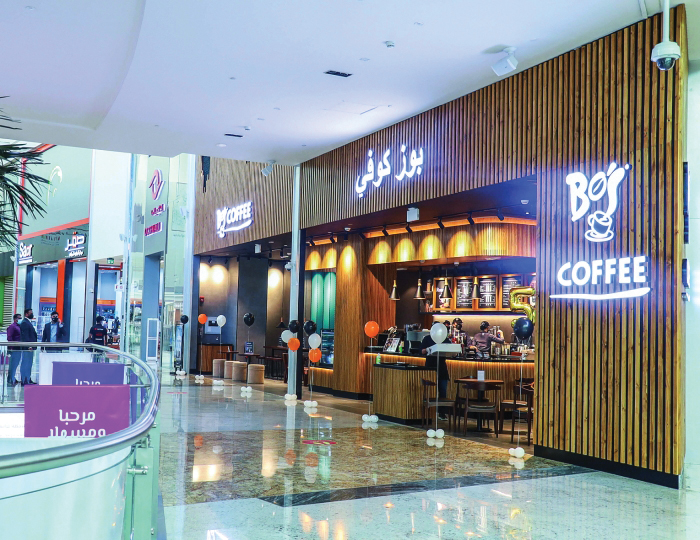
A Bo’s Coffee branch in Abu Dhabi

When Steve Benitez opened the first branch of Bo’s Coffee in Ayala Center Cebu in 1996, few could have imagined that this humble kiosk would evolve into a global Filipino brand. Born in a time when international coffee chains were starting to dominate the Philippine market, Bo’s Coffee stood out by being proudly local, and more importantly, proudly Cebuano.

Planting the First Seed

Steve Benitez was just a young entrepreneur with a law degree and a big dream. Instead of pursuing a legal career, he followed a different aroma — the rich scent of freshly brewed coffee. That dream began with a simple desire: to serve coffee made with homegrown beans from the highlands of the Philippines and create a space that celebrated Filipino warmth and hospitality.

The early days were tough. People didn’t immediately flock to a “local” coffee shop. In fact, Benitez had to do the barista work himself, sometimes even giving away free coffee just to introduce the brand. But he stayed firm, fueled by passion, belief in Filipino products, and his Cebuano grit.

Rooted in Filipino Identity

Unlike global coffee chains that showcase foreign flavors and imported beans, Bo’s Coffee built its brand on a different principle: supporting Filipino farmers and communities.

The beans come from the mountain provinces of Sagada, Benguet, Mt. Kitanglad, Mt. Apo, and Mt. Matutum. Each cup served in Bo’s is a tribute to the Philippines’ rich coffee-growing heritage. This commitment to local sourcing didn’t just ensure fresh quality — it also empowered farming communities across the country, making Bo’s not just a business but a movement.

Moreover, Bo’s Coffee made a conscious decision to highlight Filipino culture in every detail — from the interiors of their stores that feature local art and furniture to their partnerships with local social enterprises. It’s a coffee experience infused with bayanihan and malasakit.

The Cebuano Spirit of Resilience and Innovation

The growth of Bo’s Coffee can also be seen as a mirror of Cebu’s own rise — from a regional hub to a global player. Just as Cebu established itself as a center for trade, tourism, and culture, Bo’s grew from one shop to over 100 branches nationwide, then began opening doors abroad.

In 2018, Bo’s Coffee opened its first international branch in Doha, Qatar, followed by expansion plans in the UAE and other key cities in the Middle East. This was not just a business move; it was a tribute to the millions of OFWs and Filipinos overseas who longed for a taste of home.

Steve Benitez called this move a way to “bring the Filipino coffee experience to the world.” And just like that, a Cebuano-born coffee brand became a symbol of national pride, carried abroad by the winds of nostalgia and ambition.

More Than Coffee: A Platform for Empowerment

One of the lesser-known yet deeply inspiring aspects of Bo’s Coffee is its support for social entrepreneurs. The company collaborates with local enterprises like Anthill Fabric Gallery (for uniforms and furnishings), Bayani Brew (for bottled tea), and Hope in a Bottle (for purified water) — creating a value chain that uplifts small businesses and promotes sustainable livelihoods.

This ecosystem approach — where success is shared, not hoarded — reflects the Filipino value of community, deeply rooted in Cebuano heritage.

Legacy Brewing

Today, Bo’s Coffee continues to expand while keeping its values intact. It has become more than just a coffee shop; it’s a homegrown legacy, a Cebuano-born brand that chose to grow slow, grow proud, and grow local — before going global.

As the aroma of Filipino coffee begins to waft across the world, Bo’s stands as a reminder that sometimes, the best brands don’t come from Silicon Valley or European capitals. Sometimes, they begin right in the heart of Cebu — with a bold vision, a warm heart, and a very good cup of coffee.

Bo’s Coffee has more than 120 branches already including 9 outlets in Qatar and 2 in Dubai. Canada and the USA ate next in their expansion