📊 Cebu’s Top 10 Largest and Smallest Towns (2024 Census Update)


Cebu Province continues to show dynamic population growth, with several municipalities expanding rapidly while others remain small, peaceful communities.

Based on the 2024 census , here are the 10 largest and 10 smallest towns (municipalities only)


Top 10 Most Populous Municipalities in Cebu (2024)

RankMunicipalityPopulation
1Liloan158,387
2Minglanilla155,934
3Consolacion153,931
4Balamban98,170
5Daanbantayan95,080
6Bantayan87,394
7Barili82,427
8Argao78,111
9Pinamungajan76,586
10San Fernando76,110

🔎 Observation: The northern growth corridor (Liloan, Consolacion) and southern fringe (Minglanilla, San Fernando) are driving Metro Cebu’s urban expansion. These municipalities are already more populous than many cities in other provinces.


Top 10 Least Populous Municipalities in Cebu (2024)

Peaceful, laid-back, and often scenic — these towns are small in numbers but big in charm.

RankMunicipalityPopulation
1Tudela11,638
2Pilar12,454
3Boljoon17,153
4Ginatilan17,184
5Alcantara17,490
6Santander18,669
7Alcoy19,207
8Malabuyoc20,378
9Samboan20,736
10Ronda21,179

🔎 Observation: Many of these towns are found in southern Cebu and the Camotes Islands, where growth is slower but quality of life is prized.

🗨️ What’s your hometown?

Is it growing fast or proudly small?
Let us know in the comments! 👇

#InfoCebu #CebuFacts #Census2025 #CityhoodWatch #SugboUpdates #PopulationTrends

The Phenomenal Rise of Crispy King: How a Local Brand Took Over the Fried Chicken Throne

In an era where big names dominate the food scene and global fast-food chains enjoy decades of head start, one unlikely challenger is rewriting the playbook . Crispy King. What started as a small venture from a self-made entrepreneur with no college degree is now a national phenomenon. From just 100 branches in 2021 to more than 1,000 branches in 2025, Crispy King has done more than just grow, it has conquered.

And astonishingly, it’s still warming up.

The Man Behind the Crown

Behind Crispy King is Eric Joseph Quitalig Tolo, a name quickly rising in the Philippine business scene, though still under the radar of mainstream media. No fancy MBAs or high-profile backers — just grit, diskarte, and an uncanny ability to read the market.

Eric began with a humble bakeshop in Cebu and after growing it to four branches, he returned to his roots in Ormoc, where he would plant the seeds of an empire. Alongside Dayka Bakeshop, he also built Estong Lechon Manok , but it is Crispy King that would become his crown jewel.

A Fried Chicken Frenzy

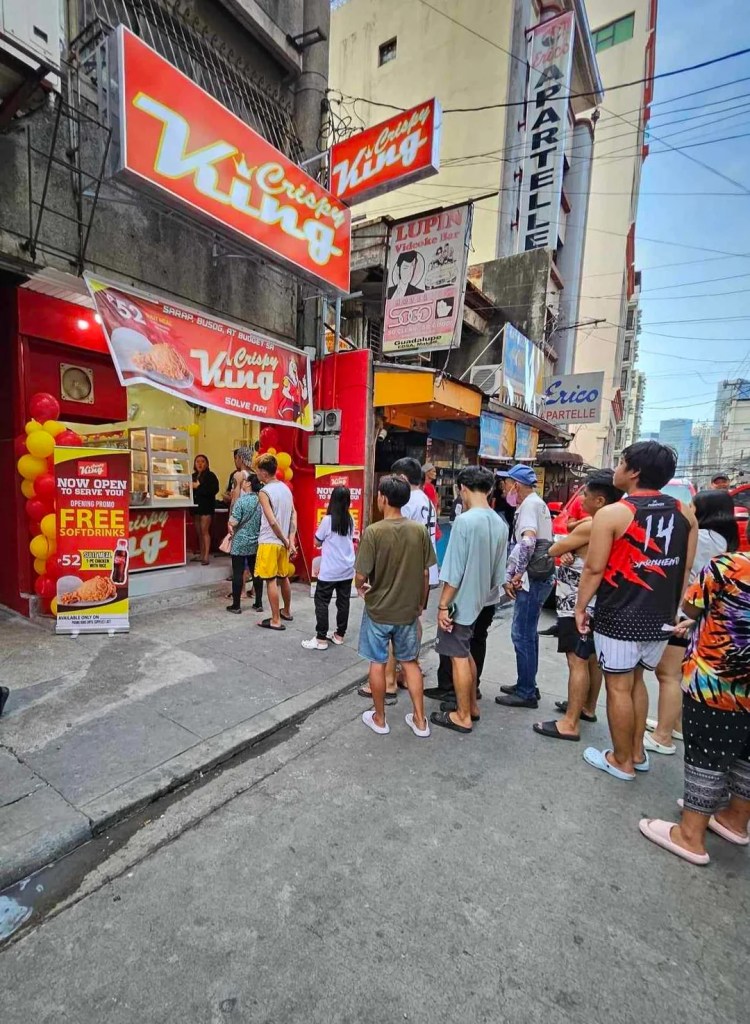
What makes Crispy King’s growth so shocking is not just the speed — but the demand. Even in towns with five or six branches, long queues snake around its humble counters during peak hours. In cities like Dumaguete, fans joke that “for every four steps you take, there’s a Crispy King,” while one follower on Facebook from Surigao quipped, “It’s not China that’s taking over our territory — it’s Crispy King.”

No PR agency engineered this. No flashy ad campaign launched it. The growth was, and still is, organic, driven by the most powerful force in marketing: word of mouth.

How Did They Expand So Fast?

The numbers are mind-bending:

  • 2021: 100 branches
  • 2023: 220 branches
  • 2025: Over 1,000 outlets and counting

In a country where permits, supply chains, and logistics can be a headache, how did this explosion even happen?

Here’s what insiders and observers believe are key:

1. Franchise Model That Works for the Masses

Crispy King’s franchise model is lean, affordable, and designed for aspiring entrepreneurs in provincial towns. The setup cost is lower than most mainstream food chains, allowing sari-sari store owners, OFW returnees, and local investors to grab a piece of the action.

2. Simplicity Is Their Secret

No fancy menus, no massive store layouts. Just a focus on what Filipinos love — crispy, flavorful fried chicken with rice at an affordable price. This allows faster setup, easier replication, and a consistent product experience.

3. Mass Appeal, Filipino Style

Crispy King’s flavor hits home. It’s reminiscent of lutong-bahay fried chicken, but with the crunch and seasoning that rivals any fast-food giant. The affordability is key: a meal at Crispy King won’t hurt your wallet but will satisfy your craving.

4. Real-Time Improvement

Unlike many startups that wait for perfection, Crispy King keeps evolving on the ground. Slowly but surely, better packaging, upgraded store designs, and new product lines are being introduced. Instead of launching everything at once, they’re refining as they go, a sign they’re in it for the long haul.

Flying Under the Radar

Perhaps the most surprising thing about Crispy King is how little is written about them. Apart from a rare video interview with Korina Sanchez, there is no well-oiled PR team. No press releases, no glossy media coverage. Yet, the brand is winning ground branch by branch, town by town.

And that’s what makes the rise even more impressive — it’s unmanufactured. The buzz comes from long lines, full rice meals, and satisfied customers.

The Impact: Is the Joyful Bee Still Sleeping Well?

Make no mistake . Crispy King is not just some flash-in-the-pan trend. The consistency in quality, speed of expansion, and unrelenting demand suggest something deeper: a real disruption in the local fast-food industry.

Even the country’s most beloved brands — including the once untouchable “joyful bee” — must be taking notice. When a challenger can open multiple branches in one town and still have customers lining up, it’s no longer an anomaly. It’s a market shift.

What’s the Real Secret?

According to Eric himself, Sipag at tiyaga are not enough. You need to have diskarte as well.

That word — diskarte — is hard to translate but deeply understood by every Filipino hustler. It’s resourcefulness. Street smarts. The instinct to navigate challenges and spot opportunities others miss.

It’s also what has brought a man with no college degree from a bakery in Cebu to a fried chicken empire in Ormoc, with 1,000+ branches across the nation — and growing daily.

A Kingdom Still Rising

Crispy King isn’t just building a brand — it’s building a movement. It speaks to every Filipino dreamer who’s ever wanted to start something of their own. It proves that you don’t need an Ivy League diploma or billions in capital to win in business. Sometimes, all you need is a killer recipe, a clear vision, relentless execution — and a whole lot of diskarte.

One thing’s certain: The chicken wars are far from over.

And Crispy King?
They’re just getting started.

📍Seven Cebu Towns Now Qualified for Cityhood Under RA 11683

Cebu Province continues to assert its status as an economic powerhouse, with six municipalities now meeting the qualifications for cityhood under Republic Act No. 11683, the amended Local Government Code of 1991.

RA 11683 simplifies the conversion of municipalities into component cities by removing the population requirement for LGUs that meet both income and land area thresholds. Specifically, a municipality may qualify if it has:

✔ An average annual income of ₱100 million, based on 2020 constant prices, as certified by the Department of Finance
✔ And either a contiguous territory of at least 100 sq. km or a population of at least 150,000.

This change has made way for more towns—especially rural and tourism-based municipalities like Moalboal and Oslob—to become cityhood contenders, even with smaller populations.

🏙️ Three Towns Have Already Filed Cityhood Bills

Three have filed official cityhood bills under the 19th Congress:

  • Liloan – House Bill No. 5031, filed by Rep. Duke Frasco
  • Consolacion – House Bill No. 1324, filed by Reps. Daphne and Sonny Lagon
  • Balamban – House Bill No. 1018, filed by Rep. PJ Garcia, with full qualifications and an active campaign for conversion

These LGUs have demonstrated economic resilience, growing urban centers, and strong administrative capacity—factors that have fueled their drive to become full-fledged cities.

🆕 Four More Towns Qualify

Recently, Balamban, Oslob, Argao and Moalboal crossed the qualifying thresholds in income or land area, joining Liloan, Minglanilla, and Consolacion. Their inclusion showcases how strategic tourism, investment, and infrastructure have transformed these towns into viable urban centers.

⚠️ Roadblocks to Cityhood

Despite meeting all legal requirements, the journey to cityhood is not always smooth. One of the major hurdles comes from the League of Cities of the Philippines (LCP), which often opposes new city conversions due to the impact on the National Tax Allotment (NTA)—the newer term for the Internal Revenue Allotment (IRA).

With more cities dividing the same national tax pool, existing cities worry about decreased funding, which could affect their own development priorities. This has resulted in slower approvals and tighter scrutiny for cityhood bills in recent years.

in the last three years, only two new cities were created, Carmona, Cavite ans Baliwag, Bulacan.

Still, local leaders remain hopeful. In Cebu, cityhood is seen not just as a status upgrade, but as a path to better services, infrastructure, and local autonomy.

📈 A Sign of Cebu’s Expanding Growth

The rise of these seven cityhood-ready municipalities is a clear reflection of Cebu’s decentralizing economic development. As Metro Cebu continues to expand, more towns across the province are growing into independent hubs—bringing services, business opportunities, and development closer to communities.

As of today, the seven Cebu municipalities qualified for cityhood are:

Liloan
Minglanilla
Consolacion
Balamban
Oslob

Argao
Moalboal

Other municipalities now being closely monitored for potential qualification include Compostela, San Fernando, Daanbantayan, Cordova and other fast growing LGUs in both the north and south.

Today, all cities in Cebu are within the Metro Cebu agglomeration except for Bogo City and Toledo City, but the latter is also adjacent to Cebu City so only Bogo City can be truly considered as separate growth corridor for now, but soon, Oslob, Argao and Moalboal will likewise drive progress in Southern Cebu.


📰 InfoCebu will continue to follow these developments as part of our ongoing commitment to reporting on Cebu’s growth and governance.

#CebuCityhood #CebuRising #InfoCebu #RA11683 #CityhoodWatch #CebuDevelopment

HOME

Welcome to InfoCebu.com

Tracking Cebu’s growth, one story at a time.

From real estate news and infrastructure updates to local legends, heritage, and business insights, InfoCebu is your digital home for everything Cebu.

Whether you’re a Cebuano,away for the moment, an investor looking in, or just curious about the Queen City of the South, we’re here to bring you closer to home.

Dayon bai!

Flash Elorde: The Golden Boy From Bogo City

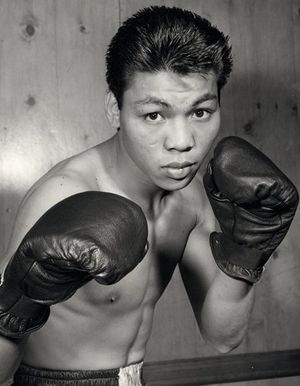
Before Manny Pacquiao ever laced a pair of gloves, one name stood tall in Philippine boxing, Gabriel “Flash” Elorde. Born on March 25, 1935, in Bogo, Cebu.

Elorde’s story is one of quiet beginnings, unshakable discipline, and international triumph. Long before boxing became a staple of Philippine pop culture, Flash was already carving his name into the annals of sports history.

Humble Beginnings in Bogo

Growing up in a modest family of 15 siblings, Elorde learned early the values of perseverance and resilience. He didn’t even finish elementary school—opting instead to help support his family by working various odd jobs. His boxing journey began informally, fighting in local bouts across Cebu, earning just a few pesos, but impressing crowds with his lightning-quick footwork—hence the nickname “Flash.”

Rising Through the Ranks

At just 16, Elorde turned professional and caught the attention of the national boxing scene. His graceful, southpaw style—later influenced by Filipino-American legend Ceferino Garcia—set him apart. But it was his training under Japanese fighter and trainer Koichi Wajima that refined his style into what would dominate the featherweight and junior lightweight divisions.

In 1956, Elorde shocked the boxing world by defeating Sandy Saddler, then the world featherweight champion, in a non-title bout in Manila. This victory put Elorde on the international radar.

World Champion

On March 16, 1960, Flash made history. He defeated Harold Gomes of the United States via a seventh-round knockout in Quezon City, capturing the World Junior Lightweight Title—the first Filipino to win a world boxing title since Pancho Villa in the 1920s. Elorde held the title for over seven years, defending it 10 times, a feat that remains unmatched in junior lightweight history.

A Champion Inside and Outside the Ring

Elorde wasn’t just a fighter; he was a gentleman. Known for his humility, discipline, and sportsmanship, he embodied the ideal Filipino athlete. He became a national figure during the 1960s, endorsing brands and appearing in media, but never losing his roots in Bogo.

After retiring in 1971, he helped train a new generation of Filipino boxers and established a boxing promotion business that would carry his name—the Elorde Boxing Gym, now run by his sons and grandchildren.

Legacy and Honors

Flash Elorde passed away on January 2, 1985, at the age of 49 due to cancer. But his legend continues. He was posthumously inducted into the International Boxing Hall of Fame in 1993. In his honor, the Flash Elorde Awards recognize the best in Philippine boxing every year. A statue of him stands proudly at the Bogo City Plaza, reminding locals that greatness can rise from even the humblest of origins.