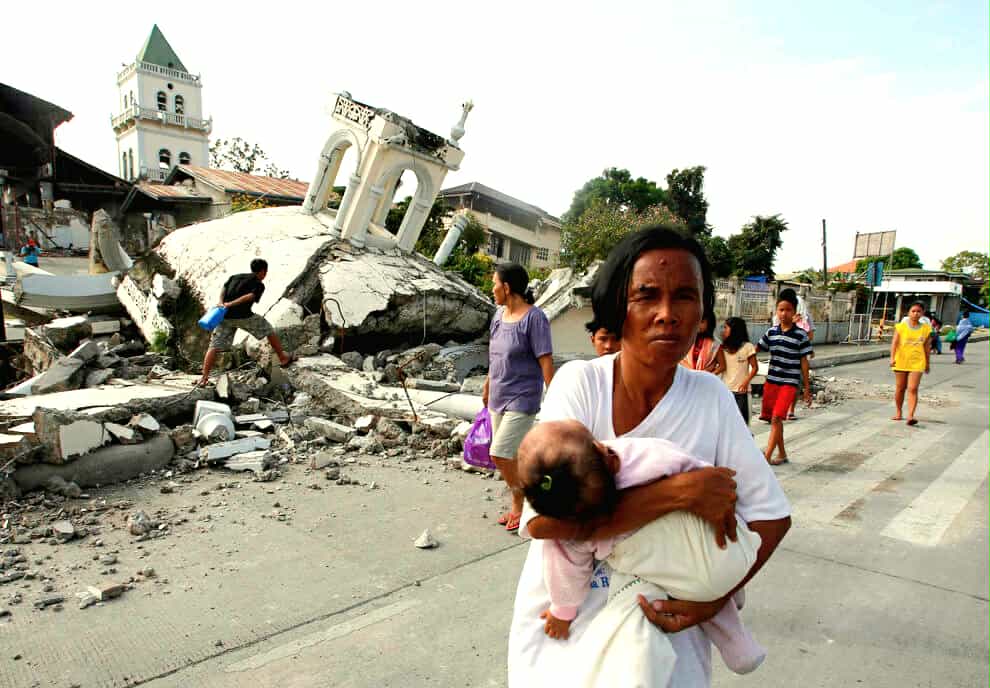
12 Years After the Bohol Earthquake: Comparing Two Great Quakes of the Visayas

2013 Bohol Quake

It has been twelve years since the violent 7.2-magnitude earthquake struck Bohol on October 15, 2013, one of the most devastating disasters to hit Central Visayas in modern times.

The quake left more than 200 people dead, injured hundreds, and damaged over 70,000 homes. Historic churches, bridges, and roads collapsed. The impact extended beyond Bohol, Cebu also suffered casualties and heavy structural damage, proving that the tremor’s reach went far beyond one island.

Now 12 years after, another major earthquake shook the region, this time a magnitude 6.9 quake centered in Bogo, northern Cebu. Though slightly weaker, it caused significant destruction in Bogo, San Remigio, Medellin, and nearby towns, where over 70 lives were lost and thousands of homes were damaged. Yet unlike the Bohol tragedy, the casualties were mostly confined to a handful of northern Cebu towns, not across multiple provinces.

Interestingly, the Bogo quake revealed a surprising geological feature , an alarming number of sinkholes, especially in San Remigio where more than a hundred were discovered. In contrast, the Bohol earthquake was more known for the dramatic rise of the North Bohol Fault or “Great Wall of Bohol”, rather than sinkholes. This shows that while both disasters shared the same regional fault system, their surface effects were remarkably different.

The Bohol earthquake remains the more powerful and widespread of the two, claiming more lives, damaging heritage churches, and leaving a deep scar across Central Visayas. The Bogo quake, on the other hand, stands out for its localized devastation and unusual geological aftermath. Both serve as painful reminders that the Visayas lies along an active fault zone, and that preparedness remains the best defense against the earth’s next violent awakening.

Manila Under Water

Torrential Rains Submerge the Capital

Manila, Philippines — July 22, 2025

Water level at Marikina river this morning is critical at 16 meters

Large parts of Metro Manila were submerged on Monday night as torrential monsoon rains, intensified by a low-pressure area, caused widespread flooding, traffic standstills, and the suspension of classes and government work in many areas.

The heavy rains began late Sunday and intensified throughout Monday, overwhelming drainage systems and turning major roads into rivers. Areas such as España Boulevard in Manila, Taft Avenue in Pasay, and parts of Quezon City, Makati, and Marikina were reported to be under waist-deep to chest-deep floodwaters.

The Philippine Atmospheric, Geophysical and Astronomical Services Administration (PAGASA) reported that the southwest monsoon (habagat), enhanced by a nearby weather disturbance, dumped record rainfall over a 24-hour period. PAGASA issued red rainfall warnings in multiple NCR districts and neighboring provinces including Rizal, Cavite, and Bulacan.

The Metropolitan Manila Development Authority (MMDA) declared a state of emergency in some areas, as flood levels breached critical thresholds. Emergency responders were deployed to assist stranded commuters, evacuate residents from low-lying communities, and monitor the rising water in river systems.

“We are experiencing one of the most severe flooding events since Ondoy,” said MMDA Chairperson Romando Artes, referring to the devastating 2009 typhoon. “We urge everyone to stay indoors, avoid unnecessary travel, and closely follow official advisories.”

At least 15,000 individuals have been displaced across the capital region, with temporary shelters opened in schools and barangay halls. Power outages were also reported in several districts due to damaged transformers and precautionary shutdowns.

President Ferdinand Marcos Jr. called for immediate coordination between national agencies and local government units. “Let us prioritize rescue, relief, and safety. We will rebuild, but right now we must save lives,” the President said in a statement released Tuesday morning.

Classes in all levels and work in government offices across NCR have been suspended for Tuesday, July 22, to allow for clearing operations and further assessment of the damage.

As water levels slowly recede in some areas, experts warn that more rains are expected throughout the week. The Department of Health also reminded the public to be wary of leptospirosis and waterborne diseases, urging those who waded through floods to seek medical consultation immediately.