
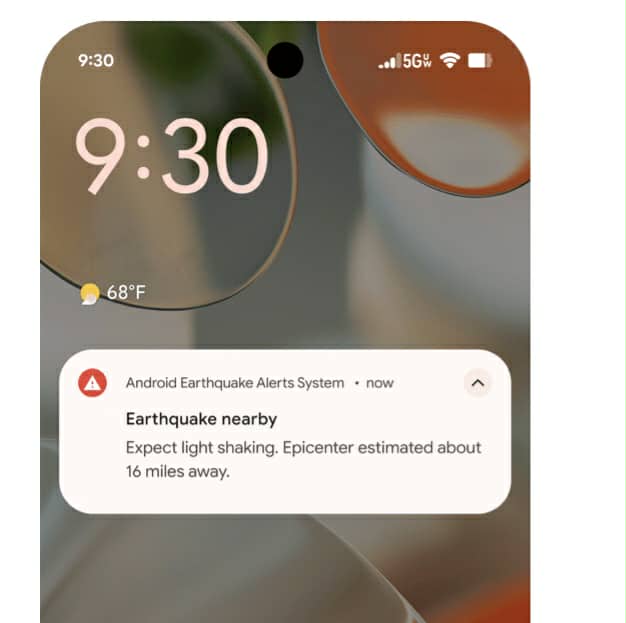
When the magnitude 6.9 earthquake struck Northern Cebu and parts of Leyte last night, many residents were caught off guard. Yet, some Cebuanos report something almost unbelievable: their Android phones buzzed with an alert just seconds before the ground shook. This has left many people asking, is it really possible for a phone to “predict” an earthquake?
Not Prediction, but Early Warning
Scientists emphasize: earthquakes cannot be predicted hours or days in advance. What phones do is different, they provide early warning.
Android smartphones come equipped with motion sensors called accelerometers, the same technology that makes your screen rotate when you tilt your phone. When an earthquake begins, even weak tremors are picked up by thousands of Android phones in the affected region.
These signals are instantly sent to Google’s servers. If enough phones detect shaking, the system confirms an earthquake and sends an alert to nearby Android phones.
Seismic waves travel slower than internet data, the warning can reach people seconds before the strongest shaking arrives.
In last night’s case, those precious seconds gave some residents time to duck under tables, move away from dangerous objects, or brace themselves.
Why Only Android Phones?
Google’s Android Earthquake Alerts System is built into Android devices (as far back as Android 5.0). That means practically any Android phone can serve as both a mini-seismometer and a warning device. iPhones, on the other hand, do not have a similar system.
While iPhone users can still receive alerts if local governments push them through telecom providers or apps, the phone itself does not detect and contribute data to a global early warning network.
Why Every Household Should Have One
Last night’s experience shows just how valuable this technology is. Even a few seconds’ warning can mean the difference between panic and preparedness.
Safety – You can drop, cover, and hold before the shaking intensifies.
Family protection – With one or two Android devices in a household, the chance of getting alerted increases.
Community contribution – Every Android phone in Cebu also helps Google’s network detect quakes faster and more accurately.
A Wake-Up Call
The reports from Cebuanos remind us that technology is now part of disaster preparedness. Earthquakes will always strike without notice , but with Android’s system, we at least get a fighting chance to prepare, even if it’s just a matter of seconds.
For households, the lesson is clear: it’s worth keeping at least one Android phone active and connected. When the ground starts to move, those seconds of warning could save lives.
 InfoCebu