Only 8% of Cebu is flat land and it is depleting very fast. Scarcity drive prices up and with no other option, Cebu’s expansion will be skyward.
Cebu IT Park, then and now
Cebu has a limited buildable space. Only eight percent (8%) of its total land area is flat and this is stretched along the coastline of an elongated island. There are only two growth directions. Go north or move south.
Early days
In the 60’s, southward development began in San Nicolas Mambaling area. Subdivisions like Ma. Gochan with its fruity streets Avocado, Bayabas, Caimito, etc were established for new families.
Today, this area is very near to the city center but in those times, it was considered far. It was the distance of the ‘Parada‘ (Calesa).
Then Labangon, Punta Princesa and Tisa were developed next. Residential structures took over the corn and peanut fields, as demand for new housing steadily increase
The city government of Cebu realized the scarce land resource and the need to address the requirement of a rapidly growing city.
North Reclamation in the 90’s
Plans were initiated for the north reclamation project which eventually became the home of SM City Cebu, the first mall outside Metro Manila.
The 70’s saw expansion crawling towards the barangays of Pardo in the South and Mabolo in the north. Even with the Martial Law, economy in Cebu remained vibrant.
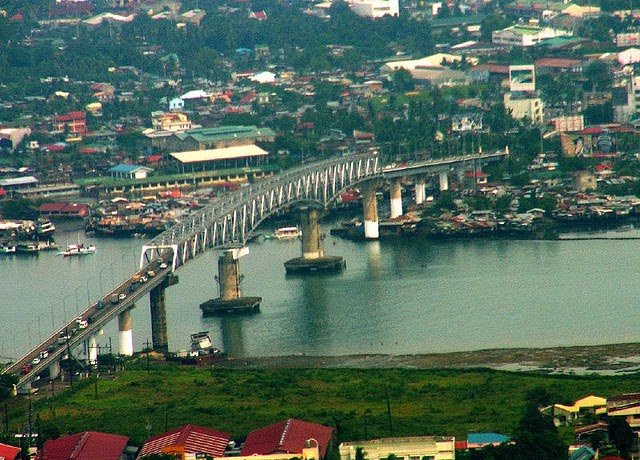
The 1st Mactan bridge
Marcos built the first Mactan bridge which opened up the island for economic and tourism activities.
The 80’s saw major expansion in Cebu, filling the hills of Guadalupe all the way to Pardo.
In the north, Lito Osmena (EMRO Holdings) moved farther north the haven of the ultra-rich, Maria Luisa Subdivision.
Banilad at that time was considered a distant suburb. I remember buying Japanese corn in a sparsely populated stretch in today’s BanTal road, which became Gaisano Country Mall not long after.
Gaisano Country Mall
The 90’s saw an unprecedented growth in Cebu. Dubbed “Ceboom”, the tandem of governor Lito Osmena and Mayor Tom Osmena opened Cebu to opportunities never seen before.
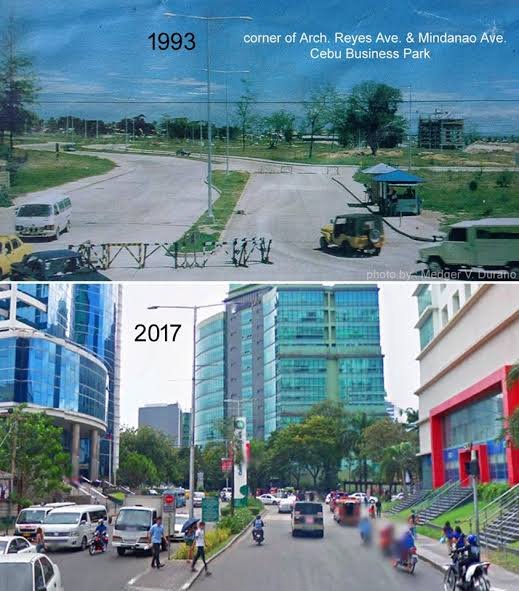
Cebu Business Park, then and now
Manila developers went on crazy shopping for land. Ayala cornered the provincial lot used as a golf course and the Lahug airport property, both of which are now bustling business districts. SM also secured the greatest chunk in the new reclamation.
Residential expansion now extends to Talisay city and Mandaue city. The northward expansion also shifted eastward to Mactan island because of the transfer of the new airport and the creation of Mactan Export Processing zone.
Low cost housing became a hit, selling in the thousands as Pag-Ibig loan facility became available.
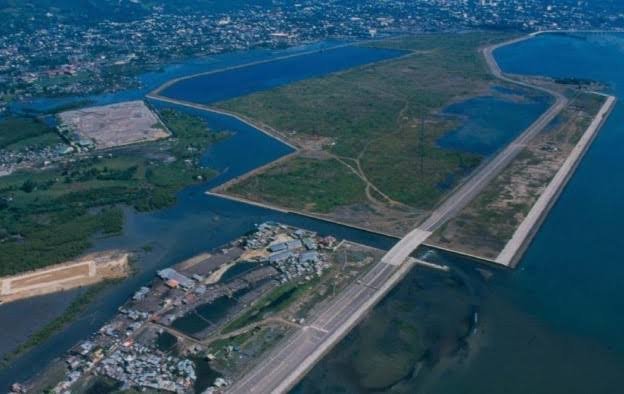
The SRP when it was newly completed
Mayor Tom Osmena then floated the idea of a south reclamation project even before the one in the north was completely sold-out.
The early nineties was also called the age of malling as three giant malls opened in Cebu City within an 18-month period. Gaisano Country Mall, opened in 1992 followed by SM City Cebu then Ayala Center Cebu (ACC) in 1993.
How these malls almost killed the businesses in Colon street will be a good separate story.
Vertical Homes
Condominiums started out in Cebu as mere status symbol for the rich. But it was short-lived with the onset of the Asian Crisis in 1997-98.
The slowdown in real estate activities continued into the new millennium although low and mid-high properties continue to sell.
Then there was the second wave of Ceboom in 2006. It just exploded out of nowhere and real estate growth went exponential since then.
Two things happened, residential properties are now pushed farther north to Compostela and down south to Naga city, but traffic also started to deteriorate and became a daily occurence.
Traffic woes and scarcity of space made condominiums a necessity in Cebu rather than an item of luxury as it was before.
Reaching the limit
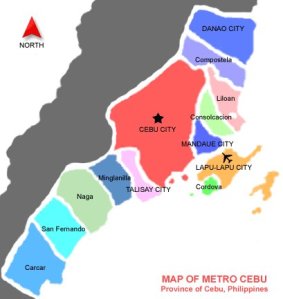
Areas after Compostela in the north and Naga City in the south are no longer viable as residence for low and mid-income families who commutes daily for school and work in Cebu City. It is a total waste of time, productivity and money.
Metro Cebu
Nowhere to go
This is a clear indicator that Cebu has nowhere to go but up. The future is in the skies.
There are ambitious plans to build highways slicing through the mountain or a viaduct above the sea. Even a mass transport system, probably the rail type is in the works.
But these infrastructures take time to build, and while they help in moving people fast, the scarcity of land remains. It is irreversible.
Developers know its a dire situation. They now scamper hard even for small parcels of land just to be able to churn out projects like pocket developments.
Cebu’s topography is telling us its not just the best time to buy a house now but its the only time left before prices will become exceedingly expensive. Scarcity drive prices up.
If you have money to invest, do not wait and see, for waiting is a costly exercise in real estate. Buy now then sit back and watch the value of your property grow.
When all the land is utilized, Cebu’s future development will be skyward. A true skyscraper city in the making.
*********
Credit goes to the owners of images used. Special mention Slerz, whose passion for Cebu is unwavering, a fellow Skyscrspercity forumer and a good friend.



 InfoCebu