Water level at Marikina river this morning is critical at 16 meters
Large parts of Metro Manila were submerged on Monday night as torrential monsoon rains, intensified by a low-pressure area, caused widespread flooding, traffic standstills, and the suspension of classes and government work in many areas.
The heavy rains began late Sunday and intensified throughout Monday, overwhelming drainage systems and turning major roads into rivers. Areas such as España Boulevard in Manila, Taft Avenue in Pasay, and parts of Quezon City, Makati, and Marikina were reported to be under waist-deep to chest-deep floodwaters.
The Philippine Atmospheric, Geophysical and Astronomical Services Administration (PAGASA) reported that the southwest monsoon (habagat), enhanced by a nearby weather disturbance, dumped record rainfall over a 24-hour period. PAGASA issued red rainfall warnings in multiple NCR districts and neighboring provinces including Rizal, Cavite, and Bulacan.
The Metropolitan Manila Development Authority (MMDA) declared a state of emergency in some areas, as flood levels breached critical thresholds. Emergency responders were deployed to assist stranded commuters, evacuate residents from low-lying communities, and monitor the rising water in river systems.
“We are experiencing one of the most severe flooding events since Ondoy,” said MMDA Chairperson Romando Artes, referring to the devastating 2009 typhoon. “We urge everyone to stay indoors, avoid unnecessary travel, and closely follow official advisories.”
At least 15,000 individuals have been displaced across the capital region, with temporary shelters opened in schools and barangay halls. Power outages were also reported in several districts due to damaged transformers and precautionary shutdowns.
President Ferdinand Marcos Jr. called for immediate coordination between national agencies and local government units. “Let us prioritize rescue, relief, and safety. We will rebuild, but right now we must save lives,” the President said in a statement released Tuesday morning.
Classes in all levels and work in government offices across NCR have been suspended for Tuesday, July 22, to allow for clearing operations and further assessment of the damage.
As water levels slowly recede in some areas, experts warn that more rains are expected throughout the week. The Department of Health also reminded the public to be wary of leptospirosis and waterborne diseases, urging those who waded through floods to seek medical consultation immediately.
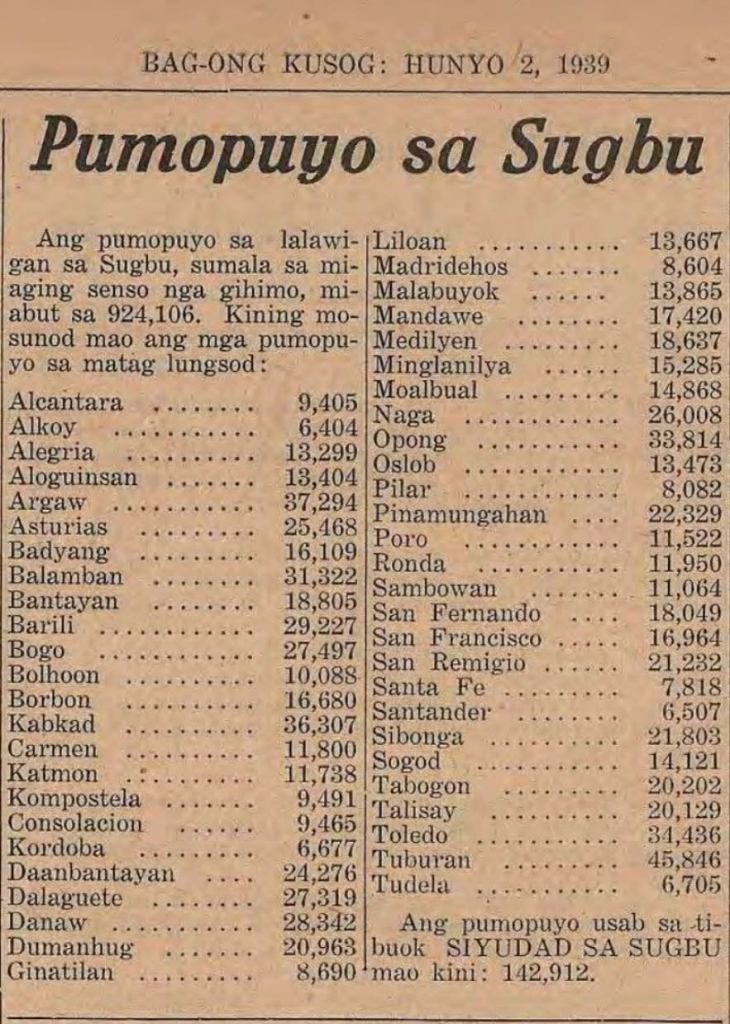
The most recent census has just been released, revealing the official population count of each barangay across every town and city in Cebu. While Metro Cebu continues to bustle with urban expansion, traffic, and soaring high-rises, the latest numbers tell a story beyond the skyline.
Despite the province’s steady march toward modernization, Cebu remains home to several municipalities that seem untouched by time. These small, charming pueblos, hidden between mountain ranges or nestled along sleepy coastlines, carry with them a rustic spirit that resists the chaos of urban growth. Here, centuries have passed, yet the population has barely moved.
Now let us look back to a census conducted in Cebu in 1939. The entire province had a population of less than a million. Cebu was already a vital port and cultural hub, but it was still a far cry from the urban giant it is today.
At the time, Cebu City—then the only chartered city in the province—had a population of just 142,912.
But what may truly surprise you is the list of the most populous towns in Cebu back in 1939. Some of today’s lesser-known municipalities were once bustling centers of activity. Others that now enjoy rapid growth and cityhood status were, back then, quiet agricultural settlements.
MOST POPULATED TOWNS IN CEBU ( 1932 CENSUS)
Tuburan – 45,845
Argao – 37,294
Carcar – 36,307
Toledo – 34,436
Opon (now Lapu-Lapu City) – 33,814
Balamban – 31,322
These figures reveal an older Cebu where economic activity revolved around agriculture, fishing, and local trade, long before the rise of BPO hubs, airports, malls, and industrial estates.
Some of these towns, like Carcar and Danao, have retained their prominence, growing into cities in their own right. Others, such as Argao and Tuburan, while still thriving, have since been outpaced by the explosive growth of Metro Cebu and the Mactan corridor.
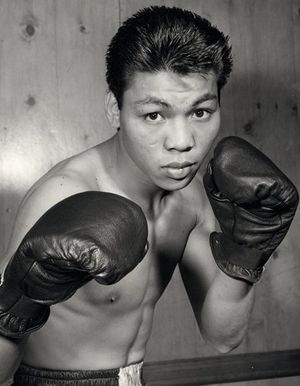
Before Manny Pacquiao ever laced a pair of gloves, one name stood tall in Philippine boxing, Gabriel “Flash” Elorde. Born on March 25, 1935, in Bogo, Cebu.
Elorde’s story is one of quiet beginnings, unshakable discipline, and international triumph. Long before boxing became a staple of Philippine pop culture, Flash was already carving his name into the annals of sports history.
Humble Beginnings in Bogo
Growing up in a modest family of 15 siblings, Elorde learned early the values of perseverance and resilience. He didn’t even finish elementary school—opting instead to help support his family by working various odd jobs. His boxing journey began informally, fighting in local bouts across Cebu, earning just a few pesos, but impressing crowds with his lightning-quick footwork—hence the nickname “Flash.”
Rising Through the Ranks
At just 16, Elorde turned professional and caught the attention of the national boxing scene. His graceful, southpaw style—later influenced by Filipino-American legend Ceferino Garcia—set him apart. But it was his training under Japanese fighter and trainer Koichi Wajima that refined his style into what would dominate the featherweight and junior lightweight divisions.
In 1956, Elorde shocked the boxing world by defeating Sandy Saddler, then the world featherweight champion, in a non-title bout in Manila. This victory put Elorde on the international radar.
World Champion
On March 16, 1960, Flash made history. He defeated Harold Gomes of the United States via a seventh-round knockout in Quezon City, capturing the World Junior Lightweight Title—the first Filipino to win a world boxing title since Pancho Villa in the 1920s. Elorde held the title for over seven years, defending it 10 times, a feat that remains unmatched in junior lightweight history.
A Champion Inside and Outside the Ring
Elorde wasn’t just a fighter; he was a gentleman. Known for his humility, discipline, and sportsmanship, he embodied the ideal Filipino athlete. He became a national figure during the 1960s, endorsing brands and appearing in media, but never losing his roots in Bogo.
After retiring in 1971, he helped train a new generation of Filipino boxers and established a boxing promotion business that would carry his name—the Elorde Boxing Gym, now run by his sons and grandchildren.
Legacy and Honors
Flash Elorde passed away on January 2, 1985, at the age of 49 due to cancer. But his legend continues. He was posthumously inducted into the International Boxing Hall of Fame in 1993. In his honor, the Flash Elorde Awards recognize the best in Philippine boxing every year. A statue of him stands proudly at the Bogo City Plaza, reminding locals that greatness can rise from even the humblest of origins.
“Unisol started as a vision to empower experienced sewers in our community while addressing the demand for high-quality uniforms. Today, we’re not just making uniforms; we’re revolutionizing the industry through innovation and technology,” Chief Executive Officer Jonas Quilantang said.
In 2017, Quilantang, chief executive officer of Unisol, realized a gap in the clothing industry. “We saw a gap in the uniform industry. With Unisol, we aim to fill that space by offering high-quality, scalable uniform solutions, while employing skilled workers in our community.”
While the market for ready-to-wear fashion had established major players, the workwear and uniform sector needed a go-to brand. This realization sparked the creation of Unisol, a company driven by a bold vision: to revolutionize the uniform industry and become the leading brand in the Philippines.
From Hobby to Enterprise
Quilantang started selling T-shirts in school as a hobby. However, two key realizations in 2017 set the course for its establishment.
First, despite the high demand for uniforms, there was no dominant brand in the market. Unlike food or shelter, clothing, while a basic need, was underserved regarding professional workwear.
Secondly, Lapu-Lapu City, where Unisol is based, is home to large manufacturing facilities for international brands like Adidas and Under Armour. When these brands’ contracts ended, experienced workers—skilled in producing high-quality garments—were often left unemployed.
“It sparked the vision of Unisol,” Quilantang explains. “We saw the opportunity to create a social enterprise that could provide these experienced sewers a second chance at employment, while also filling a market gap.”
Building from Scratch
Starting with just five sewing machines and no factory, Unisol had humble beginning. Setting up a fully functional factory took years, as they expanded to include essential machinery such as embroidery machines and sublimation printers. When he established his company, he saw that the country’s uniform industry still used outdated processes. Unisol aimed to change that.
Quilantang and his team focused on modernizing uniform production by integrating technology into the entire process. By 2022, after five years of setting up their production facility, Unisol was ready to scale and innovate. Their goal was not just to make uniforms but to revolutionize how uniforms were produced, making the process more efficient, scalable, and adaptable to market demands.
Tech-Driven Innovation
Today, Unisol is a tech-driven apparel company that utilizes innovative processes to streamline uniform production. One of its standout innovations is its booking and order management system, which addresses common issues in the uniform industry: long lead times and unpredictable delivery dates. With this system, Unisol ensures that clients receive high-quality uniforms on time, every time.
“We want to be the ‘Jollibee’ of uniforms in the Philippines,” says Quilantang, referring to the country’s beloved fast-food chain known for its reliability and consistency. Unisol’s vertically integrated manufacturing facility allows the company to control the entire production process, from fabric selection to final assembly. This ensures that every uniform meets their high standards of quality and durability.
Social Enterprise at Its Core
Beyond profit, Unisol operates with a strong social mission, creating employment for skilled workers who had previously been let go by international brands. Unisol also showed its capability to adapt to challenges.
During the pandemic, there was no demand for uniforms. While other businesses had to suspend operation, Unisol made adjustments by producing face masks to meet the high market demand. This allowed Unisol to employ around 3,000 sewers—up from their usual team of 300 to 500 workers. This not only validated their business model. It also reinforced their role as a social enterprise committed to supporting the local community.
“Unisol is about more than just uniforms,” Quilantang emphasizes. “We’re about creating jobs, empowering workers, and contributing to the economy.”
Revolutionizing Workwear
Unisol’s products include T-shirts, polo shirts, button-downs, jackets, and pants. These come in various fits and designs to suit different industries and client preferences. They’ve even introduced a line called “A Family,” which offers complete uniform sets for workers to wear from Monday to Friday—a solution for companies that want their employees to look consistent throughout the week without repeating outfits.
Unisol is proud to offer two unique product lines to meet the diverse needs of businesses everywhere. It introduced the Chameleon uniform set for companies and organizations who want a complete and cohesive look for the entire workweek. The Chameleon set is crafted from premium materials and provides comfort and durability.
For those on the go or those needing fast and easy-to-order uniforms for events, Unisol offers the menu-based U-Go Unliprint uniform collection. This collection offers a choice of T-shirt, polo shirt, button-down, or jacket designed to look professional. Unisol’s innovative unliprint technology, uniforms will no longer be boring.
By offering diverse product lines, including items tailored to schools and corporate clients, Unisol can cater to different market segments while maintaining high standards.
Looking Ahead
Unisol now plans to expand its market reach nationwide. With eyes on the future, Unisol will join the Manila Fame 2024 Reimagination, a Home, Fashion, and Lifestyle Trade Show set on October 17-19, 2024 to be held at the World Trade Center.
Unisol is poised for continued growth as it refines its production capabilities and expands its product offerings. With a research and development team dedicated to testing and improving products, Unisol remains committed to innovation. Their goal is clear: to be the number one provider of uniform apparel in the Philippines while uplifting the community that helped them get there.
“Unisol is more than a business—it’s a movement,” says Quilantang. “We’re here to disrupt the industry, provide opportunities for our workers, and offer high-quality, affordable uniforms that help brands and companies shine.”
In a market that’s ready for change, Unisol is leading the way.




 InfoCebu